Choosing the 2026 best Matrine Powder manufacturers requires more than comparing prices or polished websites. Global buyers need documented quality, stable supply, and clear communication. The strongest suppliers should explain their Sophora flavescens sourcing, extraction method, active-content testing, and batch-release procedures. They should also provide current certificates of analysis, identity testing, microbiological results, heavy-metal limits, and residual-solvent data.
Dr. Shaoping Li, a pharmacognosy researcher, has emphasized, “Botanical quality begins with correct identity and consistent preparation.” This principle matters when evaluating Matrine Powder. A pale color does not prove purity. A high assay does not guarantee dependable manufacturing. Buyers should examine HPLC or equivalent analytical records, production-site qualifications, traceability documents, and packaging controls. Questions about shelf life deserve direct answers.
Look beyond the brochure.
Reliable manufacturers usually describe their facilities, quality-management systems, and export experience without making exaggerated health claims. They can discuss minimum order quantities, private-label options, storage conditions, and realistic lead times. Strong communication also matters when specifications change.
This guide compares manufacturers through a practical buyer’s lens. It considers product consistency, technical transparency, documentation quality, production capacity, and service reliability. Some suppliers may look impressive but provide limited evidence. That weakness should not be ignored. Other manufacturers may offer excellent testing but lack flexible logistics. No shortlist is perfect.
The right partner depends on your application, destination requirements, and internal quality standards. Request samples, verify documents independently, and review each batch before scaling purchases. That extra step may feel slow. It often prevents expensive surprises later.
2026 Best Matrine Powder Manufacturers for Global Buyers?
Matrine Powder is a refined botanical powder containing matrine, an alkaloid commonly derived from Sophora species. Its appearance may range from pale beige to light brown. The color depends on extraction, drying, and plant material. It is not uniform.
Manufacturers typically produce Matrine Powder for regulated agricultural, research, or industrial applications. Some buyers also source Matrine Extract as a concentrated liquid or standardized intermediate. The intended use should guide every specification. A material suitable for laboratory testing may not meet agricultural formulation requirements. Details matter. Buyers should request identity testing, assay results, moisture content, particle size, residual solvent data, and microbiological limits. HPLC testing can support accurate matrine identification and quantification.
Reliable suppliers should provide traceable batch records, clear packaging details, and a current certificate of analysis. They should also explain storage conditions, shelf life, and transport controls. A sealed moisture-barrier bag can help protect the powder during long-distance shipping. However, packaging alone cannot correct poor raw materials. Check the botanical source, harvest information, processing method, and quality-management procedures. A neat certificate does not replace independent verification. Testing a pre-shipment sample is often practical, although it adds time and expense. Regulatory acceptance also differs by destination, so buyers must confirm local requirements before purchase. Even careful sourcing has gaps; transparent communication is more valuable than exaggerated purity claims.
Matrine powder begins with authenticated Sophora flavescens roots, not anonymous plant material. Reliable manufacturers document the botanical name, growing region, harvest season, and drying conditions. Clean roots are washed, cut, and milled before extraction. Moisture control matters. Excess moisture can encourage microbial growth and weaken extraction efficiency.
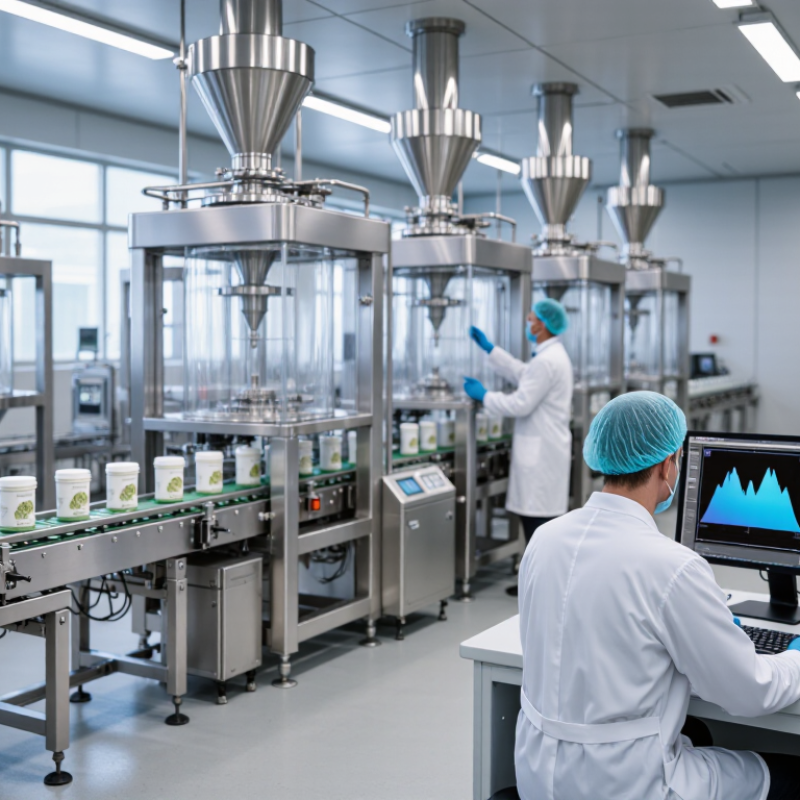
A controlled water-ethanol process can draw matrine and related alkaloids from the plant matrix. Filtration removes fibers and suspended solids. The liquid extract is then concentrated under reduced pressure to protect heat-sensitive compounds. Refining may include adsorption, ion exchange, crystallization, or membrane separation. These steps reduce pigments, sugars, proteins, and unwanted alkaloids. Final drying often uses vacuum or spray drying, creating a free-flowing powder.
Standardization turns a variable botanical extract into a measurable ingredient. Experienced quality teams commonly use HPLC or UPLC to determine matrine content. They also test moisture, ash, microbial limits, heavy metals, pesticides, and residual solvents. Each batch should carry a certificate of analysis, production record, and traceable reference standard. No batch is perfectly identical. That variability deserves honest reporting. A strong manufacturer investigates unusual results instead of quietly averaging them away. Global buyers should review method validation, sampling plans, stability data, and packaging protection against light and humidity before approving a supplier.
A reliable matrine powder manufacturer in 2026 must prove more than production capacity. FAOSTAT reported global pesticide use at approximately 3.70 million tonnes in 2022. This scale increases pressure for traceable, consistent alternatives. Buyers should request batch-specific certificates of analysis, not generic product sheets. The report should show matrine assay, moisture, impurities, and testing methods. High-performance liquid chromatography results matter here.
Manufacturing discipline is equally important. A dependable supplier follows documented quality systems, calibrated equipment, and controlled extraction conditions. ISO 9001 certification can support process consistency, but it does not replace independent laboratory verification. The FAO/WHO pesticide specification framework emphasizes identity, active-content limits, impurities, and validated analytical methods. Ask for stability data under realistic storage conditions. A sealed drum in a hot warehouse tells a different story. Many suppliers overlook this detail.
Tips: Check three recent batches. Compare assay variation. Request retention-sample policies and full traceability from raw material to shipment. Confirm whether the factory can explain an unexpected color or odor change. That conversation is revealing. Also review packaging integrity, lead times, and change-control records. Sustainability claims deserve evidence, too. I would not judge reliability from a polished website alone; one missing test record can expose a weak quality system.
Global buyers assessing matrine powder should treat the certificate of analysis as a starting point, not final proof. The WHO Global Report on Traditional and Complementary Medicine 2019 states that 88% of WHO Member States recognize traditional medicine use. This broad market increases the need for consistent botanical identity and traceable testing.
A reliable supplier should provide HPLC results for matrine content, chromatographic fingerprints, and batch numbers linked to raw-material records. LC-MS confirmation can reduce identification errors. ICP-MS testing should cover lead, arsenic, cadmium, and mercury. GC-MS screening is useful for pesticide residues. Microbial tests should include total counts, yeast, mold, and specified pathogens. ISO/IEC 17025 accreditation strengthens laboratory credibility, while GMP and HACCP support controlled production. Still, a certificate may represent only one batch. That limitation deserves attention.
For searches involving Genistein Powder, Sophora Japonica Extract, wholesale genistein powder, genistein powder price china, genistein powder suppliers china, genistein powder manufacturers china, and genistein powder factory, buyers should request the same evidence. Check the testing method, detection limits, laboratory scope, and report date. ISO 9001 alone does not confirm product purity. Organic certificates also require scope verification. Ask for retained-sample policies, stability data, and corrective-action records. Documentation can look complete while sampling remains weak. A small inconsistency may reveal a larger quality-control problem.
Supplier-neutral quality benchmark for evaluating matrine powder manufacturers and export documentation
| Evaluation Dimension | Recommended Buyer Benchmark | Typical Test or Evidence | Relevant Standard or Reference | Importance for Global Buyers |
|---|---|---|---|---|
| Identity | Positive identification of matrine; chemical identity should correspond to CAS RN 519-02-8. | HPLC retention-time comparison, LC-MS, and/or FTIR spectrum against a qualified reference standard. | ICH Q2(R2) principles for analytical procedure validation; validated in-house method. | Prevents substitution, mislabeling, and confusion with related quinolizidine alkaloids. |
| Assay / Purity | Buyer-defined specification; a ≥98.0% HPLC assay is commonly used as a high-purity commercial benchmark, but it is not a universal legal limit. | HPLC or UPLC with a documented calculation basis, reference standard, chromatogram, and system-suitability results. | ICH Q2(R2); ISO/IEC 17025 laboratory competence requirements. | Confirms potency and supports consistent formulation, research, or agricultural use. |
| Molecular Information | Formula: C15H24N2O; relative molecular mass approximately 248.36 g/mol. | Verified technical data sheet and consistency between specification, certificate of analysis, and analytical results. | CAS and internationally recognized chemical identity records. | Reduces customs, regulatory, and product-registration discrepancies. |
| Related Substances | Individual and total unspecified impurities should be controlled according to the buyer’s intended use and validated method. | HPLC impurity profile with reporting thresholds and batch-to-batch trend data. | ICH Q3A/Q3C concepts may be relevant for pharmaceutical applications; local rules prevail. | Helps control process variability and unknown degradation products. |
| Water / Loss on Drying | Set a documented limit suitable for the application; ≤5.0% is a commonly requested commercial target for dry powder, subject to product validation. | Loss-on-drying or Karl Fischer water determination. | Pharmacopoeial general methods or validated ISO/IEC 17025 laboratory methods. | Supports stability, flowability, packaging performance, and microbial control. |
| Residue on Ignition / Ash | A justified buyer specification should be established from process capability and intended use; no single global limit applies to every matrine powder. | Residue-on-ignition or total ash testing, reported with the method and sample basis. | Applicable pharmacopoeial general test methods or validated laboratory procedures. | Indicates inorganic contamination and process-cleanliness control. |
| Heavy Metals / Elemental Impurities | Limits must match the destination market and intended use; testing should cover relevant elements such as lead, cadmium, arsenic, and mercury. | ICP-MS or ICP-OES with a complete result panel and detection limits. | ICH Q3D for applicable pharmaceutical products; EU, US, or destination-country requirements as relevant. | Important for consumer safety, regulatory clearance, and environmental-risk review. |
| Residual Solvents | If solvents are used, residual levels should comply with the applicable solvent-class limits and the buyer’s regulatory category. | Headspace GC with solvent-specific reporting and validated recovery data. | ICH Q3C(R8) or the current applicable revision. | Demonstrates process safety and helps satisfy pharmaceutical and regulated-market requirements. |
| Pesticide Residues | Use a destination-market residue list and maximum-residue limits; do not rely on a generic “pesticide-free” claim without test data. | Multi-residue LC-MS/MS and GC-MS/MS screening with a stated analyte list. | Applicable EU, US, Codex, or importing-country pesticide-residue regulations. | Critical when the botanical source or agricultural-use history may introduce residues. |
| Microbiological Quality | Specify total aerobic microbial count, total yeast and mold count, and absence criteria according to intended use. | Compendial microbial enumeration and specified-organism testing. | USP , USP , Ph. Eur. 2.6.12, and Ph. Eur. 2.6.13 where applicable. | Supports safe handling, shelf life, and acceptance by regulated customers. |
| Physical Characteristics | Appearance, color, odor, particle-size distribution, and Bulk density should be defined in the purchase specification. | Visual inspection, sieve or laser-diffraction analysis, and bulk-density testing where relevant. | Validated internal methods or recognized pharmacopeial powder-test procedures. | Improves dosing accuracy, blending, filling, and production consistency. |
| Stability and Retest Period | Shelf life should be supported by real-time or accelerated stability data under defined packaging and storage conditions. | Assay, impurity, moisture, appearance, and microbiological testing at scheduled intervals. | ICH Q1A(R2) principles for applicable pharmaceutical development. | Prevents unsupported expiry claims and reduces supply-chain quality risk. |
| Batch Traceability | Every shipment should have a unique batch number linked to raw materials, production records, test results, and packaging records. | Batch manufacturing record, certificate of analysis, packing list, and retained-sample procedure. | GMP principles and documented quality-management procedures. | Enables recalls, investigations, claims management, and repeat-order consistency. |
| Laboratory Qualification | Prefer testing performed by an independent or appropriately qualified laboratory, especially for export-release testing. | Current ISO/IEC 17025 accreditation scope, method validation summary, calibration records, and signed report. | ISO/IEC 17025:2017. | Improves confidence that results are technically valid and internationally reviewable. |
| Manufacturing Quality System | Documented procedures for deviation control, change control, CAPA, complaints, supplier qualification, and internal audits. | Quality manual, audit report, SOP index, training records, and CAPA examples with confidential information removed. | ISO 9001:2015; GMP expectations where the intended application requires them. | Shows whether the manufacturer can maintain quality beyond a single successful batch. |
| Export and Regulatory Documentation | Documentation should match the destination country, use category, tariff classification, and labeling requirements. | Certificate of analysis, SDS, specification sheet, origin documents, non-animal or allergen statements where relevant, and transport-storage instructions. | Destination-country customs, chemical-safety, pesticide, food, cosmetic, or pharmaceutical rules as applicable. | Reduces customs delays, regulatory rejection, and documentation-related claims. |
Global buyers assessing matrine powder manufacturers should treat documentation as a market-entry requirement, not a sales attachment.
WHO’s 2019 Global Report on Traditional and Complementary Medicine found that 170 of 194 Member States reported using traditional medicine. This uneven adoption creates different rules for botanical alkaloids. A valid supplier file should include botanical identification, plant-part details, extraction method, matrine assay, batch number, country of origin, and full traceability.
Request a recent certificate of analysis with HPLC chromatograms, not only a purity percentage. Test results should cover pesticides, heavy metals, residual solvents, microbial limits, aflatoxins, and undeclared adulterants. For European shipments, classification under REACH and CLP may require additional review, depending on intended use and concentration. Food or supplement applications may also require evidence supporting the local ingredient status. In the United States, the importer must assess applicable FDA requirements, facility records, labeling, and prior notification duties.
Search phrases such as “Pure Curcumin Powder Turmeric Extract Powder High Curcumin Turmeric Berberin Hcl” can create serious identity confusion. They do not describe matrine and should never replace a precise specification. Packaging should show net weight, lot code, storage temperature, and expiry logic. Keep samples from each shipment.
One weakness remains. A polished dossier can still hide weak sampling. Buyers should independently verify high-risk results through an accredited laboratory, especially when the supplier changes raw-material sources. Supplier audits, corrective-action records, and stability data often reveal more than promotional claims.
Global buyers comparing matrine powder suppliers should examine evidence, not only price. The WHO Global Report on Traditional and Complementary Medicine 2019 states that 88% of Member States acknowledge traditional medicine use. This broad demand makes traceability increasingly important.
Request a recent certificate of analysis for every production lot. Check matrine assay, moisture, microbial limits, heavy metals, pesticide residues, and solvent residues. Ask whether testing uses validated HPLC methods and independent laboratories.
A supplier’s specification should match the buyer’s target application. Do not compare matrine powder with Rosmarinic Acid Powder as equivalent products; their assays, extraction yields, and testing requirements differ.
Capacity needs practical verification. Ask for standard batch size, monthly output, current utilization, lead time, and emergency production options. Confirm raw-material seasonality and whether two consecutive batches can meet the same specification. WHO’s Good Agricultural and Collection Practices guidance highlights controlled sourcing, correct botanical identification, and documented handling. These details often separate a stable producer from a trading intermediary.
Pricing should include packaging, testing, shipping terms, and rejected-batch responsibility. A very low quotation may hide weaker assay control or inconsistent raw materials. That is not always true. It still deserves investigation. Request three recent COAs, a retained-sample policy, and an audit trail from cultivation or collection to final packaging. Suppliers should also explain how they manage specification failures without delaying delivery.
Production should begin with authenticated Sophora flavescens roots. Records should show the botanical name, growing region, harvest season, and drying conditions. Anonymous plant material creates avoidable risk. Moisture matters.
Clean roots are washed, cut, and milled. A controlled water-ethanol process extracts matrine and related alkaloids. Filtration removes fibers and suspended solids. Reduced-pressure concentration helps protect heat-sensitive compounds.
Refining can use adsorption, ion exchange, crystallization, or membrane separation. These methods reduce pigments, sugars, proteins, and unwanted alkaloids. Vacuum or spray drying can produce a free-flowing powder. The process is not automatically perfect.
Laboratories commonly use HPLC or UPLC for matrine assay. A recent certificate should include chromatograms, not only a purity percentage. The test method should be validated and linked to a reference standard. A single number needs context.
Testing should cover moisture, ash, microbial limits, heavy metals, pesticides, and residual solvents. Aflatoxins and undeclared adulterants may also require review. Keep a retained sample from each shipment. That small sample can matter later.
Request the certificate of analysis, production record, and full batch traceability. Files should identify the plant part, extraction method, origin, lot number, and assay. Ask for stability data and packaging details. A polished dossier can still hide weak sampling.
Ask about batch size, monthly output, current utilization, and lead time. Confirm raw-material seasonality and emergency production options. Request evidence from two consecutive batches. Capacity claims deserve verification.
Compare packaging, testing, shipping terms, and rejected-batch responsibility. A very low quotation may reflect weaker raw materials or assay control. Ask for three recent certificates and corrective-action records. Cheap is not always efficient.
Matrine Powder is a plant-derived alkaloid ingredient valued for its consistent composition, versatile research and industrial applications, and potential use in approved agricultural, pharmaceutical, and health-related formulations. This article explains its key characteristics, including purity, active-content concentration, appearance, solubility, moisture level, and shelf stability. It also outlines how the material is extracted, refined, filtered, dried, and standardized to achieve dependable batch-to-batch performance.
For global buyers in 2026, selecting a reliable Matrine Powder manufacturer requires careful evaluation of quality systems, production capacity, traceability, testing methods, and technical documentation. Important considerations include identity and purity analysis, contaminant screening, certificates of analysis, certifications, packaging controls, and stability data. Buyers should also review export documentation, labeling requirements, regulatory expectations in destination markets, lead times, minimum order quantities, pricing transparency, and supply continuity. Comparing suppliers through verified specifications, sample testing, audit support, and clear communication can help organizations make compliant, cost-effective, and long-term purchasing decisions.