Leave Your Message
*Name Cannot be empty!
* Enter product details such as size, color,materials etc. and other specific requirements to receive an accurate quote. Cannot be empty
0%

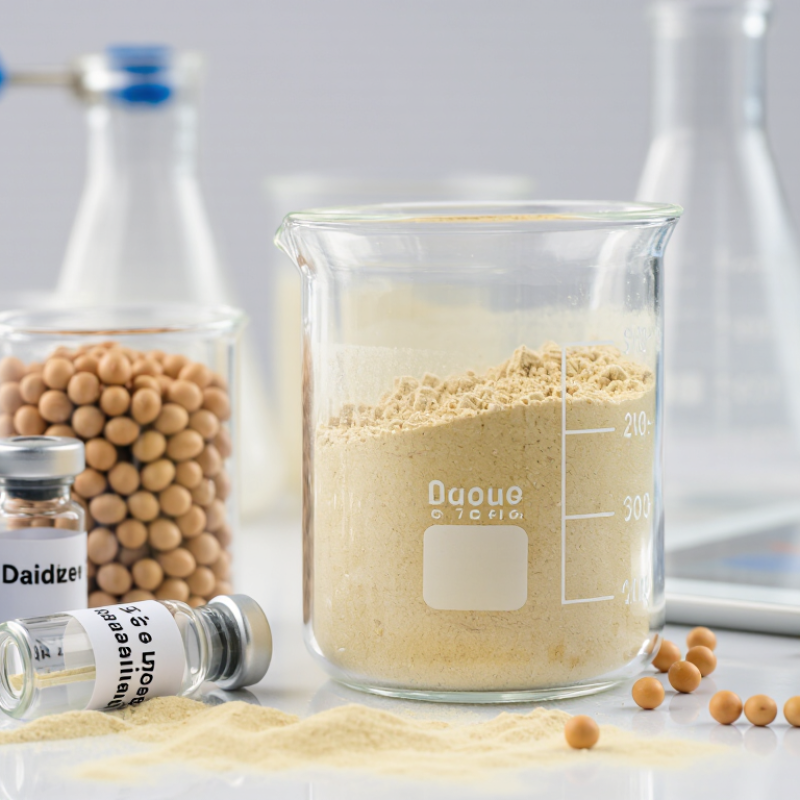
You can check out Daidzein Powder — it's a pretty concentrated soy isoflavone used mainly in nutrition research, supplement making, and sometimes in cosmetics. Usually, it’s made from non-GMO soy sources, and it’s tested thoroughly to ensure its identity, purity, low moisture content, and microbial safety. It typically looks like a fine, pale-yellow powder — little details really matter here, you know?

Market reports from places like Grand View Research and MarketsandMarkets often talk about soy isoflavones as part of a growing market for plant-based ingredients. But here’s the thing — these reports usually lump Daidzein together with other compounds like genistein and total isoflavones. So, nailing down exact figures just for daidzein can be tricky. It’s an important point to keep in mind, not just for decoration.

Dr. Stephen Barnes, a well-known researcher in this area, once said that “the biological effects of soy isoflavones depend on tissue type, the dose, and how each person's body processes them.” That’s a pretty big deal because it means what works for one person might not work for another. And, interestingly, some gut bacteria can convert daidzein into a compound called Equol, but not everyone makes enough of it. The NIH also points out that the evidence on soy isoflavone benefits varies depending on health goals and populations.

In practical terms, manufacturers often use Daidzein Powder as an active ingredient in standardized formulas. Researchers use it too when studying things like estrogen-receptor activity, bone health, and cellular signaling pathways. Even cosmetic developers sometimes look into it for potential skin benefits like Antioxidant effects, but of course, any health or beauty claims need solid evidence before making promises. It’s definitely not a magic fix. The final results can be affected by things like dosage, how it’s extracted, how well your body absorbs it, and the overall quality control.

So, if you’re thinking about it, make sure to check certificates of analysis and human data—not just laboratory findings—before assuming it’s a guaranteed solution. Sometimes what looks promising in the lab doesn’t quite translate into real-world results, right?
What Is Daidzein Powder Used For?

What Is Daidzein Powder?

Daidzein powder is a finely milled form of daidzein, a naturally occurring isoflavone found mainly in soybeans and other legumes. Daidzein belongs to a group of plant compounds called phytoestrogens. Its chemical structure can interact weakly with estrogen receptors, but it does not act like human estrogen in every person. Commercial powders may contain purified daidzein or plant extracts with varying concentrations. Reading the specification sheet matters.

What is Daidzein powder used for?

It is commonly used as an ingredient in dietary supplements, functional-food research, and laboratory formulations. Researchers also study its antioxidant activity and its relationship with bone, cardiovascular, and hormone-related health. However, evidence remains mixed, and results can differ between individuals. Gut bacteria may convert daidzein into equol, but not everyone produces equol. That detail is easy to overlook. It also means personal experience may not predict another person’s response.

Tips: Check the powder’s purity, source, serving size, and testing information. Store it in a cool, dry place, away from direct sunlight. People with soy allergies should avoid soy-derived material. Those who are pregnant, breastfeeding, taking medication, or managing a hormone-sensitive condition should seek professional advice before use. More is not automatically better. A cautious approach is sensible.

How Daidzein Powder Is Produced and Standardized

Daidzein powder is commonly produced from soybean germ, where isoflavones are naturally concentrated. USDA estimates place global soybean production near 425 million metric tons in 2024/25. Supply is broad, but raw material quality can vary. Growing region, harvest conditions, and storage temperature all influence the final extract.

Manufacturers usually mill the germ, then use ethanol-water extraction. The liquid is filtered, concentrated, and dried into powder. Some producers add adsorption or chromatography steps to enrich Isoflavone Daidzein. Spray drying creates a fine powder, almost like flour, while protecting handling stability. The process sounds clean. It is not always perfectly consistent.

Standardization depends on validated testing, not appearance. HPLC or UPLC methods compare the sample with certified reference materials. A reliable certificate of analysis should report daidzein content, total isoflavones, moisture, microbial limits, heavy metals, and residual solvents. ISO/IEC 17025 laboratory accreditation supports confidence in these results. USP quality guidance also emphasizes identity testing and contamination controls for botanical ingredients. Target strengths may range from modest enrichment to high-purity material, depending on the specification. One issue deserves attention: “98% extract” may not mean 98% pure daidzein. Buyers should check the calculation basis, batch number, test method, and result date. The label can look precise. The evidence may still be incomplete.

What Is Daidzein Powder Used For?

Daidzein is a soy-derived isoflavone used primarily in nutrition, botanical, and scientific research applications. Commercial powder is typically produced by extracting isoflavones from soy materials, followed by purification, concentration, drying, and analytical standardization. The chart shows daidzein’s calculated elemental composition from its molecular formula, C15H10O4, which can support identity and quality-control documentation.

Key Nutritional and Biological Properties of Daidzein

What Is Daidzein Powder Used For?

Daidzein powder is a concentrated source of daidzein, a naturally occurring soy isoflavone. Its key nutritional property is its polyphenol structure, which helps explain its antioxidant activity in laboratory studies. USDA FoodData Central records soybeans as providing roughly 100 milligrams of total isoflavones per 100 grams, although growing conditions and processing can change this amount. Daidzein is also a phytoestrogen. It can interact weakly with estrogen receptors, especially estrogen receptor beta. This does not make it equivalent to human estrogen.

Research often examines daidzein for bone, metabolic, and menopausal health applications. Some gut bacteria convert daidzein into equol, a metabolite with stronger estrogen-like activity. However, only an estimated 20% to 30% of Western adults consistently produce equol, according to reviews published in peer-reviewed nutrition journals. That difference may explain varied study results. Clinical evidence remains mixed, and powder forms may not match the absorption of whole soy foods.

Important detail.

The European Food Safety Authority has reported that evidence for broad health claims involving soy isoflavones remains insufficient for several proposed benefits. Therefore, daidzein powder is better viewed as a research-supported nutritional ingredient, not a guaranteed treatment. Product quality also matters. Testing should confirm identity, purity, heavy-metal limits, and isoflavone concentration. I would be cautious with impressive dosage promises. Human responses can vary substantially.

Common Uses of Daidzein Powder

Daidzein powder is an isoflavone commonly derived from soy. It is used in dietary supplement formulations because its structure resembles certain natural estrogens. Some products include it in capsules, tablets, or powdered blends for adult wellness routines. Researchers also use purified daidzein powder to study bone metabolism, hormone-related pathways, and antioxidant activity in laboratory settings. It is a useful research material, not a guaranteed treatment.

In functional food development, small amounts may be added to nutrition powders or fortified products. Cosmetic scientists sometimes examine daidzein for skin-care formulas, especially those focused on oxidative stress or skin aging. However, results can vary between laboratory studies, animal research, and human trials. That matters.

The body also processes daidzein differently from person to person. Gut bacteria, diet, age, and health status may influence its effects. A product label may sound more certain than the evidence supports. It is easy to overstate the benefits. Powder quality, testing methods, purity, and serving size deserve careful attention. People using hormone-sensitive medicines, or managing a medical condition, should consult a qualified healthcare professional before taking concentrated daidzein. Some applications remain promising, but they still need better human evidence.

Potential Health Benefits Under Scientific Investigation

Daidzein powder is a concentrated isoflavone commonly extracted from soy or other botanical materials. Researchers are studying it for possible effects on bone health, menopausal comfort, cardiovascular markers, and cellular antioxidant activity. These effects remain unconfirmed.

The evidence is mixed. A European Food Safety Authority scientific opinion found no established cause-and-effect relationship between soy isoflavones and reduced menopausal symptoms. Some clinical reviews report modest changes in hot-flush frequency, but results vary with dose, treatment length, and equol-producing ability. Only about 20–30% of adults in many Western populations produce equol efficiently, according to published nutrition research. That biological difference matters.

Bone research is also developing. A 2022 systematic review reported small improvements in selected bone markers, yet the studies were often short and used different isoflavone mixtures. Daidzein is not genistein. Their structures overlap, but their metabolic pathways differ. More careful trials are needed.

Commercial search data often combines related terms, including genistein powder, Sophora Japonica Extract, wholesale genistein powder, genistein powder price china, genistein powder suppliers china, genistein powder manufacturers china, and genistein powder factory. These terms describe sourcing interest, not proven health value. Buyers should request identity testing, purity results, contaminant screening, and stability data. A certificate alone is not enough. Product quality can still vary between batches.

Dosage Forms, Safety Considerations, and Possible Side Effects

Daidzein powder is an isoflavone commonly studied for its estrogen-like activity. It may appear in dietary supplements aimed at supporting bone, metabolic, or menopausal health. However, research results remain mixed, and personal responses can differ. It is unrelated to the search phrase “Pure Curcumin Powder Turmeric Extract Powder High Curcumin Turmeric Berberin Hcl,” which describes different ingredients.

Dosage forms include loose powder, capsules, tablets, and blended formulas. Powder allows flexible measuring, but a small kitchen spoon is not accurate enough. Follow the product label and use a measured scoop. There is no universal dose for everyone. A pharmacist or qualified healthcare professional should review the ingredient amount, especially when other supplements or medicines are involved.

Tips: Check the supplement facts panel, batch testing, and storage instructions. Keep the powder dry and tightly sealed. Possible side effects include nausea, stomach discomfort, headache, or allergic reactions. Some people may need extra caution because daidzein can interact with hormone-sensitive conditions or prescribed treatments. Pregnancy, breastfeeding, upcoming surgery, and liver or kidney disease require professional advice before use. Stop taking it and seek medical help if swelling, breathing difficulty, or severe dizziness occurs. I would not assume “natural” means risk-free; that shortcut can lead to poor decisions.

Storage Guidelines and Quality Selection Criteria

What Is Daidzein Powder Used For?

Daidzein powder is commonly studied as a soy-derived isoflavone ingredient for research and formulation development. Its value depends heavily on purity, identity, and handling conditions. Quality can decline before visible changes appear. That is easy to miss.

Storage should follow the supplier’s stability data, not guesswork. ICH Q1A(R2) identifies 25°C and 60% relative humidity as a long-term condition, while accelerated testing uses 40°C and 75% relative humidity. These figures help evaluate packaging and shelf life. For routine storage, keep the powder in a cool, dry, dark area. Use a tightly sealed, food-compatible container. Avoid bathrooms, windowsills, and repeated opening. Moisture can cause clumping and may complicate accurate weighing. USP guidance commonly defines controlled room temperature as 20–25°C, with permitted excursions from 15–30°C.

Selection requires more than a high assay number. Request a current certificate of analysis with HPLC identity and potency results. Check moisture, residual solvents, heavy metals, pesticides, and microbiological limits. An independent laboratory accredited to ISO/IEC 17025 offers stronger verification. Review the batch number, production date, retest date, and testing methods. A 98% assay may still hide poor microbiological control. That detail matters. I would also compare three batches when possible, because one attractive report proves little. Packaging should include an intact moisture barrier, tamper evidence, and clear storage instructions. Claims about stability should match real study conditions, not marketing language. Some assumptions remain uncertain without a complete stability file.

What Is Daidzein Powder Used For? - Storage Guidelines and Quality Selection Criteria

Category Data Dimension Practical Information Selection or Handling Guidance
Product Identity Compound type Daidzein is an isoflavone, a plant-derived polyphenolic compound commonly associated with soy and other legumes. Confirm the stated chemical name, molecular identity, and whether the material is pure daidzein or a standardized botanical extract.
Common Uses Nutraceutical and dietary supplement research Used as an ingredient or research material in products and studies examining soy isoflavones, bone health, metabolic processes, and estrogen-related pathways. Use only within applicable regulatory requirements; research findings do not automatically establish clinical benefits for every product or user.
Common Uses Pharmaceutical and formulation research May be used as an analytical reference, formulation component, or investigational material in studies of bioactivity and delivery systems. Evaluate solubility, stability, particle size, and compatibility with excipients before formulation work.
Common Uses Food and botanical analysis Can serve as a reference compound for testing isoflavone content in soy-based foods, botanical materials, and extracts. Prefer a certificate of analysis with an appropriate analytical method, such as HPLC or UPLC.
Quality Selection Assay or purity The assay should be clearly stated as a percentage or concentration, together with the testing basis and method. Select a specification appropriate to the intended use and verify the result on a lot-specific certificate rather than relying only on a catalog description.
Quality Selection Identity confirmation Identity may be confirmed using chromatographic comparison, spectroscopic testing, or another validated method. Check that the identity test distinguishes daidzein from related isoflavones such as genistein and glycitein.
Quality Selection Contaminant controls Relevant checks may include heavy metals, residual solvents, pesticides, microbial contamination, and aflatoxins when applicable. Review test limits, methods, units, and results against the requirements of the destination market and intended application.
Quality Selection Physical characteristics A suitable powder should have a consistent appearance, uniform particle distribution, and no visible foreign matter or unusual odor. Define color, mesh or particle-size range, bulk density, and flowability when these properties affect processing.
Documentation Traceability Important records include lot number, production date, retest or expiry date, country of origin, and analytical test date. Choose materials with complete, current, and lot-specific documentation that can be linked to the delivered container.
Storage Temperature and environment Store in a cool, dry, well-ventilated area, protected from direct sunlight and excessive heat. Follow the supplier’s labeled temperature range; avoid repeated temperature fluctuations and storage near moisture or strong odors.
Storage Packaging and moisture protection Powders can absorb moisture or form lumps when exposed to humid air, especially after opening. Keep in the original, tightly closed, light-resistant container and minimize the time the container remains open.
Storage Shelf-life management Stability depends on purity, packaging, temperature, humidity, light exposure, and the manufacturer’s validated data. Use stock on a first-expiring, first-out basis and do not use material beyond its expiry or retest date without documented approval.
Safety and Compliance Handling precautions Avoid generating dust and prevent contact with eyes, skin, and clothing during weighing or transfer. Consult the current safety data sheet and use suitable ventilation and personal protective equipment.
Safety and Compliance Intended-use distinction Material sold for laboratory or research use should not automatically be treated as a food, supplement, or medicinal ingredient. Verify regulatory status, labeling, dose-related requirements, and permitted use before human consumption or commercial formulation.

Gentiopicroside Powder Industry Outlook: Insights from Grand View Research and Mordor Intelligence Reports

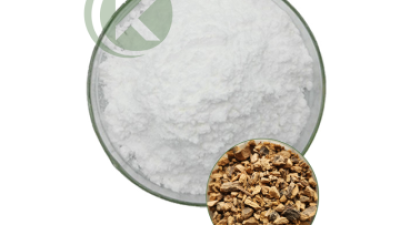
Gentiopicroside Powder, also known as Gentiopicrin Powder, is gaining attention in the botanical extract market as industry research highlights growing demand for standardized, traceable, and clean-label plant ingredients. Derived from Gentian Root, this natural extract is available in 3%, 5%, 10%, 80%, and 98% gentiopicroside specifications. Its white powder appearance, non-GMO profile, non-additive formulation, and heat-only processing make it suitable for cosmetic ingredients, healthcare supplements, and pharmaceutical ingredient applications.

Market outlook reports indicate that manufacturers increasingly value reliable supply, consistent testing, and flexible customization. The product is tested by HPLC and is offered with GMP, ISO9001, ISO22000, HACCP, KOSHER, and HALAL certifications. Buyers can request a free sample to assess quality and compatibility with their formulations. With a minimum order quantity of 1 kg, warehouse delivery within one day, and multiple payment terms such as T/T, LC, and DA, the supply program supports both trial orders and regular procurement.

With production capacity reaching 2,000 kg per month, the supplier focuses on high-content botanical extracts and pharmaceutical intermediates. Wholesale purchasing options are available for businesses seeking Gentiana Scabra Root Extract Gentiopicroside Powder, pure gentiopicroside, or a dependable gentiopicroside powder factory for long-term sourcing.

FAQS

What is daidzein powder?

Daidzein powder is a concentrated soy isoflavone ingredient. It usually comes from soybean germ, where isoflavones naturally accumulate. Its powder may look like fine flour.

How is daidzein powder produced?

Manufacturers commonly mill soybean germ before using an ethanol-water extraction process. The liquid is filtered, concentrated, and dried. Additional enrichment may use adsorption or chromatography.

How is daidzein content tested?

Laboratories commonly use HPLC or UPLC methods for identity and potency testing. Results should include daidzein content and total isoflavones. Appearance alone proves very little.

Does a 98% extract contain 98% pure daidzein?

Not necessarily. The percentage may describe a broader extract basis. Check the calculation method, batch number, test date, and analytical result. The label may look exact, but the evidence can still be incomplete.

What is daidzein powder commonly studied for?

Researchers study it for bone, metabolic, and menopausal health applications. It is also used in nutritional research and formulation development. It should not be treated as a guaranteed therapy.

Why might people respond differently to daidzein?

Gut bacteria can convert daidzein into equol in some people. This conversion varies widely between individuals. Absorption may also differ from whole soy foods. Human results remain mixed.

How should daidzein powder be stored?

Keep it in a cool, dry, dark place. Use a tightly sealed, food-compatible container with a moisture barrier. Avoid windowsills, bathrooms, and repeated opening. Moisture can cause clumping.

What quality documents should buyers request?

Request a current certificate of analysis with identity, potency, moisture, microbes, heavy metals, pesticides, and residual solvents. Review the batch number and testing date. Comparing three batches is wiser than trusting one attractive report.

Conclusion

Daidzein Powder is a concentrated preparation of daidzein, a naturally occurring isoflavone most commonly associated with soy and other legumes. This article explains how it may be extracted, purified, and standardized to provide consistent levels of the active compound. It also reviews daidzein’s nutritional characteristics and biological activity, including its classification as a plant-derived compound with estrogen-like activity that may interact with certain cellular pathways.

Common uses of Daidzein Powder include formulation in dietary supplements, functional foods, and research products. Potential benefits related to bone health, hormonal balance, antioxidant activity, and cardiovascular wellness remain under scientific investigation and should not be treated as proven medical effects. The article also discusses suitable dosage forms, the importance of following professional guidance, and possible side effects such as digestive discomfort or sensitivity. Proper storage in a cool, dry, well-sealed environment can help preserve quality, while buyers should evaluate purity, testing documentation, standardized content, and contaminant controls when selecting a product.

Lucas

Lucas

Lucas is a dedicated marketing professional at Xi'an KINTAI Biotech Inc., where he leverages his in-depth knowledge of the company's products to deliver exceptional value to clients. With a strong commitment to quality, Lucas emphasizes the company's complete quality control system, ensuring that......
Previous How to Source Chlorogenic Acid Powder in 2026?