Leave Your Message
*Name Cannot be empty!
* Enter product details such as size, color,materials etc. and other specific requirements to receive an accurate quote. Cannot be empty
0%

Buying Tetrahydrocurcumin Powdersounds pretty straightforward—until you’re staring at two white powders that have different assay results, packaging, and stability data. That’s why this guide, “7 TetrahydroCurcumin Powder Buying Tips,” zeroes in on the practical checks that actually protect product quality. As a buyer, you’ll want to look at the botanical source, extraction process, assay method, batch consistency, contaminant testing, packaging, and supplier support. And no, a bright-looking sample doesn’t prove purity. It’s just a first clue.

Dr. Bharat B. Aggarwal, a widely cited curcuminoid researcher, once wrote, “Curcumin has been shown to exhibit Antioxidant, anti-inflammatory, antiviral, antibacterial, antifungal, and antimalarial activities.” That statement is about curcumin research broadly—not every Tetrahydrocurcumin Powder product on the market. That distinction really matters. Responsible suppliers should be able to provide a current Certificate of Analysis, HPLC results, heavy-metal limits, residual-solvent data, microbiological testing, and lot traceability. Also, ask whether the stated assay measures tetrahydrocurcumin specifically. Some documents may report total curcuminoids instead.

A reliable supplier should also walk you through storage conditions. Light-resistant drums, sealed inner bags, and controlled humidity can help reduce avoidable degradation. Before placing a large order, request a recent sample. Compare its color, odor, dispersibility, and lab results. I’ve seen buyers get laser-focused on price and totally overlook inconsistent documentation. That mistake can get expensive. And here’s another imperfect point worth noting: “natural” doesn’t automatically mean standardized, stable, or suitable for every formulation. Check the intended application, dosage format, and applicable quality requirements with a qualified professional. A careful purchase isn’t the cheapest purchase. It’s the one backed by clear evidence.
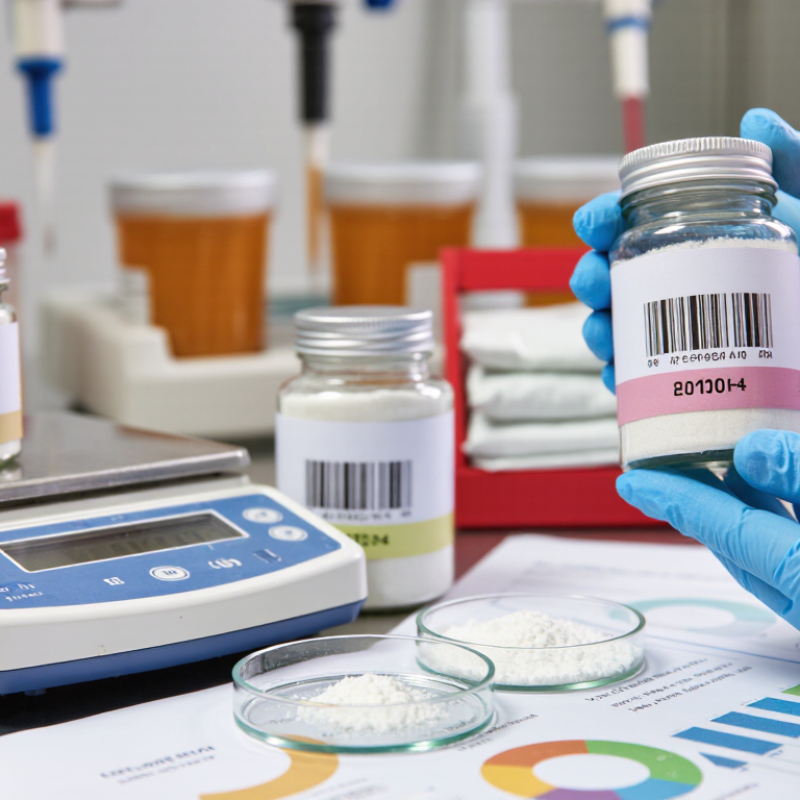
7 Tetrahydrocurcumin Powder Buying Tips?

Define Tetrahydrocurcumin Identity, Form, and Intended Use

Buying Tetrahydrocurcumin powder starts with identity, not price. Tetrahydrocurcumin is a hydrogenated curcuminoid, commonly listed as CAS 36062-41-4. Its molecular formula is C21H26O6, with a molecular weight near 374.43 g/mol. Ask for HPLC purity and LC-MS confirmation. An assay number alone is not enough.

The powder form also needs definition. Check whether it is neat material, a carrier-based blend, or a water-dispersible preparation. Review particle size, moisture, residual solvents, heavy metals, and microbiological limits. A certificate of analysis should show batch-specific results, test methods, laboratory details, and dates. I would not accept a generic PDF. That is a common weakness.

Intended use changes the buying decision. Research work may require high identity confidence and controlled storage. Food or cosmetic applications may require different specifications, documentation, and local compliance checks. Grand View Research’s 2024 curcumin market report projects approximately 12.5% compound annual growth through 2030. That growth can encourage rushed purchasing. It should not replace technical review. Compare the requested form with the actual application: a laboratory powder may disperse poorly in a finished formula. A carrier may improve handling but reduce active concentration. Small details matter. When the label says “curcuminoids,” ask whether tetrahydrocurcumin is measured separately. That question can prevent an expensive mismatch.

Verify ≥95% Tetrahydrocurcumin Purity Using HPLC Testing

When buying Tetrahydrocurcumin powder, treat the purity number as a claim, not proof. Ask for a recent certificate of analysis for the exact production lot. The document should state at least 95% Tetrahydrocurcumin by HPLC testing. It should also show the test date, sample code, method, and laboratory details.

Request the complete HPLC chromatogram, not only a percentage. Check the main peak identity, retention time, peak integration, and total impurity profile. A clear chromatogram should match the reported assay. The testing method should explain the column, mobile phase, detector, and reference standard. Without these details, “95%” can be difficult to verify. Ask whether the result uses an area percentage or a corrected assay value. They are not always identical.

Inspect the powder when it arrives. Note its color, odor, texture, seal condition, and lot number. Keep a small retained sample for comparison. I still make one mistake: I sometimes trust a clean document too quickly. That habit needs correction. Independent testing is sensible when the purchase is large or the material looks inconsistent. Store the powder in a cool, dry, light-protected container. Moisture and heat may affect handling quality, even when the original HPLC result meets the stated specification. Check whether the supplier can provide repeat testing before you commit to regular orders.

Check COA Data for Assay, Moisture, and Batch Consistency

When buying tetrahydrocurcumin powder, treat the certificate of analysis (COA) as a working document, not decoration. Start with the exact lot number and production date. An assay result without a test method is weak evidence. Look for HPLC details, reference standards, and a clear specification. Ask whether the reported percentage refers to dry-basis or as-is material. That small distinction can change your comparison.

Moisture deserves equal attention. A powder may meet assay requirements yet absorb water during storage. Check the method, such as Karl Fischer, the limit, and the actual result. Values near the limit deserve questions about packaging, warehouse humidity, and retest timing. I would also compare moisture across several lots, rather than trusting one attractive number. Dry-looking powder is not proof.

Batch consistency becomes clearer when COAs tell a similar story over time. Compare assay, moisture, test dates, and laboratory identification for at least three lots. Large swings may indicate process variation, sampling differences, or changing methods. Request raw chromatograms when results seem unusually perfect. That request is reasonable, not hostile. Still, documents cannot replace independent testing for important purchases. Send a sealed sample to a qualified laboratory, and record the lot before approval. I have learned not to overvalue polished paperwork; missing details often matter more than impressive numbers.

Assess Residual Solvents Against ICH Q3C Limits

7 Tetrahydrocurcumin Powder Buying Tips

Assess Residual Solvents Against ICH Q3C Limits

When buying tetrahydrocurcumin powder, residual solvents deserve more attention than color or price. A bright yellow powder can still hide an incomplete drying process. Request a batch-specific certificate of analysis, not a general product sheet. It should name each detected solvent, the testing method, and the reporting limit. Gas chromatography is commonly used for volatile organic solvents.

Compare every result with the relevant ICH Q3C classification and concentration limit. Class 1 solvents require strict avoidance, while Class 2 solvents have substance-specific limits. Class 3 solvents generally present lower toxicological concern, but “Class 3” does not mean unlimited use. Check the exact solvent name and result in ppm. Ask whether the limit reflects the finished powder or only an intermediate stage.

Review the laboratory’s qualifications.

An independent test adds confidence. Still, one report is not a complete quality system. Check the manufacturing date, batch number, sample identity, and laboratory accreditation. I have seen documents with impressive formatting but missing chromatograms. That should trigger a question, not immediate rejection. Also clarify whether the product is intended for food, cosmetics, or research use, because specifications may differ.

Search terms such as genistein powder, Sophora Japonica Extract, wholesale genistein powder, genistein powder price china, genistein powder suppliers china, genistein powder manufacturers china, and genistein powder factory may lead to unrelated listings. Keep them separate from tetrahydrocurcumin evaluations. Price cannot replace solvent data.

Tetrahydrocurcumin Powder Buying Tips: Assess Residual Solvents Against ICH Q3C Limits

The chart shows ICH Q3C concentration limits for commonly evaluated residual solvents. Class 2 solvents have stricter, solvent-specific limits, while Class 3 solvents are generally limited to 5,000 ppm. When buying tetrahydrocurcumin powder, compare the supplier’s batch-specific certificate of analysis with these limits and request the analytical method and test date.

Reference: ICH Q3C(R8) residual solvent concentration limits. Tetrahydrocurcumin itself is not assigned a separate solvent limit; the applicable limits depend on the solvents used during manufacturing.

Review Heavy Metals Under USP <232> and ICH Q3D Standards

7 Tetrahydrocurcumin Powder Buying Tips: Review Heavy Metals Under USP and ICH Q3D Standards

A serious purchasing review starts with the batch-specific certificate of analysis. Check lead, cadmium, arsenic, and mercury separately. USP and ICH Q3D(R2) set oral daily limits at 5 micrograms for lead, 5 for cadmium, 15 for arsenic, and 30 for mercury. These are daily exposure limits, not simply “parts per million” targets. Always compare results with the recommended serving size.

Ask whether testing used ICP-MS or another validated elemental method. Request the laboratory’s accreditation details, test date, sample identification, and reporting limits. A credible report should distinguish total arsenic from inorganic arsenic when relevant. It should also show results for each batch, not a recycled document. Seven practical checks include identity, batch number, sample date, method, laboratory competence, serving calculation, and corrective action records.

Do not accept “heavy-metal tested” as sufficient evidence. A result below detection is useful only when the detection limit is clearly stated. The 2022 ICH Q3D(R2) guideline supports risk-based elemental impurity control, while USP provides permitted daily exposure values. A low result is not automatically a strong result. Supplier paperwork can look polished and still miss dosage context. Recheck unusual results, especially when one metal appears dramatically lower than the laboratory’s reporting capability.

Confirm Microbial Quality and Moisture Levels Below 5%

When buying tetrahydrocurcumin powder, request a batch-specific Certificate of Analysis, not a generic product sheet. Check microbial results against USP General Chapters and , which cover microbial enumeration and specified organisms. Salmonella should be absent in a tested 25-gram sample, consistent with widely used food-safety criteria, including European Commission Regulation (EC) No. 2073/2005. Ask for the laboratory method, sample size, test date, and laboratory accreditation.

Moisture deserves equal attention. Require a result below 5%, preferably measured by Karl Fischer titration or a validated loss-on-drying method. Excess moisture can encourage clumping and support microbial growth during storage. ISO 21527-2 provides a recognized framework for yeast and mold testing in low-water-activity foods. A sealed pouch may still hide a poor result. I have seen powders that looked dry but formed hard lumps after opening.

Review water activity too, when available. It explains storage risk better than moisture percentage alone. Keep the report tied to the exact lot and packaging date. Search terms such as “Pure Curcumin Powder Turmeric Extract Powder High Curcumin Turmeric Berberin Hcl” can produce confusing listings, so verify the actual ingredient identity and specification. One weakness remains: a single clean test cannot represent every shipment. Retain samples and periodic re-testing provide stronger evidence.

7 Tetrahydrocurcumin Powder Buying Tips? - Confirm Microbial Quality and Moisture Levels Below 5%

No. Buying Tip Quality Dimension Recommended Buyer Requirement How to Verify Acceptance Indicator
1 Confirm identity before purchase Material identity The powder should be identified specifically as tetrahydrocurcumin and not simply as turmeric or curcumin extract. Request a batch-specific certificate of analysis and an identity test based on chromatographic comparison with a qualified reference standard. The reported chromatographic profile is consistent with tetrahydrocurcumin, with no unexplained major peaks.
2 Check assay and specification basis Active-content strength Use a clearly defined assay specification with a stated test method, reporting basis, and batch result. Do not compare percentages unless the same basis is used. Review the analytical method, reference standard information, result units, and test date on the certificate of analysis. The batch result meets the agreed specification and is supported by a suitable validated or verified method.
3 Require moisture below 5% Moisture content Moisture: , unless a tighter internal specification is required for the intended formulation. Ask for the batch moisture result and the analytical procedure, such as loss-on-drying or a validated moisture-specific method. Pass: reported moisture is below 5.0% and the sample is representative of the production batch.
4 Confirm total microbial counts Aerobic microbial quality Set limits appropriate to the intended use and local regulations. A commonly used supplement-screening example is TAMC ≤ 104 CFU/g, but this is not a universal legal limit. Request total aerobic microbial count testing using a recognized pharmacopoeial method, such as USP or an equivalent validated procedure. Result is within the written specification, with units shown as CFU/g and the laboratory method identified.
5 Screen for yeast, mold, and pathogens Specified microorganisms Include TYMC testing and absence testing for relevant pathogens, commonly including Escherichia coli and Salmonella, according to the product category and jurisdiction. Review results from USP /, Ph. Eur. 2.6.12/2.6.13, or equivalent validated microbiological methods. Yeast and mold counts meet the agreed limit; specified pathogens are absent in the tested sample quantity.
6 Evaluate water activity and storage stability Water activity and shelf life Moisture below 5% is important, but it does not by itself describe microbial growth risk. Request water activity data when shelf stability is critical. Ask for a aw result obtained with a calibrated water-activity meter, together with packaging and stability information. The water-activity result supports the proposed shelf life and remains controlled under the stated storage conditions.
7 Inspect packaging, traceability, and sampling Contamination prevention Each lot should have a unique batch number, production date, retest or expiry date, net weight, storage conditions, and tamper-evident packaging. Match the physical label, purchase documents, certificate of analysis, and retained-sample records. Check that packaging is sealed, dry, and undamaged. Complete traceability exists from the tested sample to the delivered lot, with no evidence of moisture ingress or package damage.
Buyer note: Microbial limits vary by intended use, formulation, and applicable regulations. The moisture requirement of below 5.0% should be written into the purchase specification and confirmed with a batch-specific test report.

Compare GMP Certification, Traceability, Packaging, and Supplier Support

Buying Tetrahydrocurcumin Powder requires more than checking price and appearance. Start with current GMP certification, not a logo copied onto a product page. Ask for the certificate number, issuing body, scope, and expiration date. The certification should cover the actual manufacturing site and relevant processing steps.

Tip 1: Test the paper trail.

Reliable suppliers can provide batch numbers, raw-material origins, production dates, and certificates of analysis. Compare the batch number on the document with the label on the container. A strong traceability system should help you follow the powder from incoming material to shipment. I have found that small mismatches deserve questions, even when the specification looks excellent.

Packaging protects quality during storage and transport. Look for sealed, food-compatible or pharmaceutical-grade containers, moisture barriers, tamper evidence, and clear labeling. The label should state net weight, lot number, storage conditions, and retest or expiry information. Transparent packaging is not always better; light-sensitive powders may need opaque protection.

Tip 2: Inspect the seal.

Supplier support also matters after payment. Ask about sampling, stability data, complaint handling, minimum order quantities, and shipping conditions. Good technical staff answer specific questions without making exaggerated promises. This applies to Tetrahydrocurcumin Powder and related materials, including Rosmarinic Acid Powder. Request a small sample first. Review the documents carefully. One weakness can be overlooked, but repeated gaps suggest a larger quality problem.

FAQS

What documents should I request before buying tetrahydrocurcumin powder?

Request a batch-specific Certificate of Analysis, not a generic product sheet. Check the lot number, test date, methods, sample size, and laboratory accreditation.

Which microbial tests should I review?

Check microbial enumeration and specified-organism results under USP General Chapters and . Salmonella should be absent from a tested 25-gram sample.

What moisture level is acceptable?

Require moisture below 5%. Karl Fischer titration or a validated loss-on-drying method offers useful evidence.

Why does moisture matter during storage?

Excess moisture can support microbial growth and create hard lumps. A powder may look dry inside its sealed pouch.

Should I check water activity too?

Yes, when available. Water activity often explains storage risk better than moisture percentage alone. One measure is not enough.

How can I verify manufacturing certification?

Request the current GMP certificate number, issuer, scope, and expiration date. Confirm it covers the actual manufacturing site.

How do I test supplier traceability?

Match the batch number on the certificate with the container label. Ask about raw-material origins, production dates, and shipment records.

What packaging details should I inspect?

Look for sealed containers, moisture barriers, tamper evidence, and clear labels. Opaque packaging may protect light-sensitive powder better.

What support should a reliable supplier provide?

Ask about samples, stability data, complaints, minimum orders, and shipping conditions. Specific answers matter more than confident promises.

Can one clean test prove every shipment is safe?

No. A single result cannot represent every shipment. Retain samples and use periodic retesting for stronger evidence. I could still miss a gap.

Conclusion

Buying Tetrahydrocurcumin Powder requires more than comparing prices. First, confirm the ingredient’s identity, physical form, and intended application so the specification matches your formulation needs. Request independent HPLC testing that verifies at least 95% tetrahydrocurcumin purity, and carefully review the Certificate of Analysis for assay results, moisture content, testing methods, and consistency across batches. Moisture should remain below 5% to support stability and handling.

Quality and compliance checks are equally important. Ask for residual-solvent data aligned with ICH Q3C limits and heavy-metal results that meet USP and ICH Q3D expectations. Confirm microbial specifications, including appropriate limits for total counts and pathogens. Finally, evaluate the supplier’s GMP certification, traceability system, packaging protection, storage guidance, documentation, and technical support. A reliable supplier should provide transparent, current records and consistent communication throughout the purchasing process.
Sophia

Sophia

Sophia is a dedicated marketing professional at Xi'an KINTAI Biotech Inc., where she plays a pivotal role in promoting the company's innovative products. With a profound understanding of the biotechnology industry, she ensures that the company's commitment to quality is reflected in all aspects of......
Previous Top Carnosic Acid Powder Manufacturers for Global Buyers