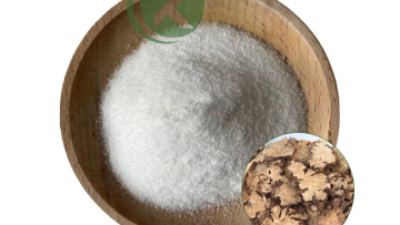
How Do You Actually Source Kaempferol Powder in 2026?
Honestly, sourcing Kaempferol Powder is not just about comparing prices on a supplier's website. That's only part of it. You still need to check identity, concentration, where it comes from, and whether batches stay consistent. A bright, polished product page? Yeah, it doesn't prove much. A clear specification sheet is way more useful.
Dr. Mark Blumenthal, who founded the American Botanical Council, has a pretty practical quality rule: “Evidence should support every quality claim.” And honestly, that fits kaempferol procurement really well. So when you’re dealing with suppliers, ask for things like HPLC or LC-MS identification, assay results, heavy metal limits, pesticide screening, residual solvent data, and microbiological testing. Also—review the actual Certificate of Analysis, not just a template. And it’s worth confirming whether the testing was done by an independent lab.
A reliable supplier should also be upfront about how they control manufacturing. You'll want to look for things like GMP systems, documented traceability, stable packaging, and clearly defined storage conditions. Companies like NutraSource Analytics or Eurofins Scientific can be helpful for third-party testing, too. That said, just having a testing company's name on the paperwork doesn't guarantee it's the right fit—what they actually test and how they test it really matters.
Before you sign off on a big purchase agreement, ask for a representative sample. Then really look it over—check the appearance, dispersibility, assay, and documentation against what you actually need. And don't forget to ask the supplier how they handle seasonal variation in raw materials. Honestly, that's the part people tend to miss.
Look, no supplier scorecard is ever perfect. My own view is pretty cautious, and honestly it’s simple: treat every claim as provisional until the records actually back it up. A low price might reflect efficient production—or it might mean testing was incomplete. In 2026, responsible sourcing really means building a documented chain from the botanical material all the way to the finished Kaempferol Powder. That process takes time, sure. But it also helps you avoid some expensive surprises later on.
Kaempferol is a naturally occurring flavonol found in plants such as onions, leafy vegetables, tea, and some berries. In commercial form, Kaempferol powder may contain purified kaempferol or a standardized botanical extract. These materials are not interchangeable. Their concentration, color, solubility, and supporting evidence can differ significantly.
Its applications are varied. Nutraceutical manufacturers may use it in capsule, tablet, or powder formulas. Food developers sometimes study it for functional beverage and nutrition products, although poor water solubility can complicate formulation. Cosmetic researchers also examine Kaempferol for Antioxidant-focused skin-care concepts. Laboratory teams use it in cell and biochemical studies.It is not a proven treatment for disease, and human evidence remains limited in several areas.
Sourcing requires more than checking the stated assay. Request a current certificate of analysis, botanical or chemical identity data, microbiological results, heavy-metal testing, residual-solvent information, and pesticide screening where relevant. I would also inspect the production route, batch traceability, packaging, and stability records. The powder should arrive sealed, dry, and free from unusual odor or hard caking. Small samples matter. A clean-looking powder can still fail testing. Suppliers should explain whether the material is isolated, extracted, or blended with carriers. Specifications may also change between batches, which is easy to overlook. Regulatory expectations differ by market, so intended use and local requirements need review before purchase.
How to Source Kaempferol Powder in 2026?
Buyers should define identity before discussing price. A valid specification should state botanical source, plant part, extraction solvent, ratio, and CAS number. Require HPLC or UPLC identification with a reference standard. A single “polyphenol” result is insufficient. The 2023 WHO Global Report on Traditional and Complementary Medicine reports traditional medicine use in 170 Member States, showing why botanical traceability matters across suppliers. Record harvest region, batch code, and processing date. Keep these records.
Set an assay range, not only a minimum. For example, buyers may request kaempferol at 98.0% or higher by HPLC, while defining moisture, ash, particle size, and residual solvents separately. These limits must match the intended product. They should not be copied blindly. USP General Chapter supports residual-solvent control, while USP describes elemental-impurity procedures using ICP-OES or ICP-MS. Test lead, cadmium, arsenic, and mercury with action limits suited to local regulations. Add microbial limits, aflatoxins, pesticides, and adulterant screening.
Use an independent laboratory accredited to ISO/IEC 17025:2017. Ask for raw chromatograms, method validation, uncertainty, and reference-standard details. The 2024 USP Food Fraud Database continues to document authenticity risks in botanical materials, so a certificate alone is weak evidence. I would also request three consecutive batch results. One clean sample proves little. Color may look acceptable while identity fails. No specification is perfect; review it after stability data, complaints, and seasonal variation.
| Specification Area | Buyer-Defined Requirement | Recommended Acceptance Criteria | Typical Test Method or Reference | Why It Matters | Release Evidence |
|---|---|---|---|---|---|
| Identity | Kaempferol powder; define whether the material is isolated kaempferol or a kaempferol-containing botanical extract. | Exact product form, botanical source, plant part, extraction solvent, and CAS/chemical identity must be stated. | HPLC or UPLC retention time compared with an authenticated reference standard; FTIR may be used as an orthogonal test. | Prevents substitution between purified kaempferol and standardized plant extract. | Specification sheet and identity chromatogram. |
| Assay / Potency | Set the minimum potency according to the finished-product dose and regulatory category. | For purified material, a practical buyer target is typically ≥98.0% kaempferol on an as-is basis; use a tighter limit only when validated by the supply chain. | Validated HPLC/UPLC quantitative method using a qualified kaempferol reference standard. | Controls dose accuracy and batch-to-batch consistency. | Batch assay result, chromatogram, and method statement. |
| Related Substances | Require reporting of known kaempferol-related compounds and total unidentified impurities. | Define individual and total impurity limits in the product specification; a common starting point is individual unknown ≤0.5% and total impurities ≤2.0%, subject to method capability. | Stability-indicating HPLC/UPLC with impurity reporting threshold and system-suitability criteria. | Provides greater control over degradation products and co-extractives. | Impurity profile and chromatographic data. |
| Appearance and Color | Define physical form, color range, odor, and absence of visible foreign matter. | Fine, free-flowing powder; color consistent with the approved reference sample; no abnormal odor, caking, or visible contamination. | Visual examination under controlled lighting and comparison with an approved retain sample. | Supports identity screening and manufacturing performance. | Certificate of analysis and retained reference sample. |
| Particle Size | Select a particle-size profile compatible with blending, encapsulation, dissolution, or dispersion requirements. | Example target: ≥95% passing a mesh selected by the buyer, such as 80 mesh; define D10, D50, and D90 when process performance is critical. | Laser diffraction or validated sieve analysis; use the same method for all qualification batches. | Influences flowability, content uniformity, dissolution, and dust generation. | Particle-size distribution report. |
| Moisture / Loss on Drying | Set a moisture limit that protects stability and prevents caking during storage. | A practical starting limit is ≤5.0% loss on drying; use Karl Fischer water testing when volatile solvents or hygroscopicity may affect results. | Loss on drying or Karl Fischer titration under a defined, validated procedure. | Excess moisture can accelerate degradation and impair powder handling. | Moisture test result and storage-condition data. |
| Heavy Metals and Elemental Impurities | Define limits based on intended daily intake and the applicable food, supplement, cosmetic, or pharmaceutical risk assessment. | At minimum, test lead, cadmium, mercury, and arsenic; apply current applicable limits rather than relying on a generic “heavy metals pass” statement. | ICP-MS or ICP-OES; assess elemental impurities using the relevant pharmacopoeial or regulatory framework. | Botanical materials may accumulate metals from soil, water, and processing equipment. | Element-specific laboratory report. |
| Microbiological Quality | Define limits according to the final application and whether the product will receive further microbial reduction. | Set limits for total aerobic microbial count, total yeast and mold count, and specified pathogens such as Salmonella and E. coli; acceptance criteria must be application-specific. | Current USP, Ph. Eur., ISO, or locally accepted microbiological methods. | Reduces contamination risk and supports finished-product shelf life. | Microbiology certificate with method references. |
| Residual Solvents | Require a complete solvent list based on the extraction and purification process. | Each detected solvent must comply with the applicable ICH Q3C class-based limits; Class 1 solvents require particularly strict control. | Headspace GC or another validated method suitable for the solvent panel. | Confirms that processing residues are controlled for consumer safety. | Residual-solvent report and process disclosure. |
| Pesticide Residues | Specify the destination market and the pesticide list required for botanical raw materials. | Results should comply with the maximum residue limits applicable in the target market; “not detected” must include the analytical reporting limit. | Multi-residue LC-MS/MS and GC-MS/MS methods performed by a competent laboratory. | Agricultural residues may vary by origin, season, and cultivation practice. | Pesticide screen with analyte list and LOQs. |
| Mycotoxins and Natural Toxins | Include relevant toxins for the botanical source and intended market. | Define limits for applicable toxins, such as aflatoxins, using destination-market requirements and a documented risk assessment. | Validated HPLC-FLD, LC-MS/MS, or an equivalent recognized method. | Improper drying or storage can increase fungal-toxin risk. | Mycotoxin test report and supplier risk assessment. |
| Stability and Shelf Life | Define shelf life, storage temperature, humidity protection, and retest requirements. | Require real-time and, where appropriate, accelerated stability data demonstrating compliance with assay, impurities, moisture, and microbiological limits. | ICH-aligned stability principles or an equivalent documented protocol appropriate to the product category. | Kaempferol quality can be affected by light, oxygen, heat, and humidity. | Stability summary, retest date, and recommended storage conditions. |
| Packaging and Labeling | Specify food-, supplement-, cosmetic-, or pharmaceutical-suitable packaging and required label information. | Use sealed, moisture-protective inner packaging with tamper-evident outer packaging; label lot number, net weight, manufacture date, retest or expiry date, and storage conditions. | Packaging-material specification, seal-integrity checks, and label review. | Protects the powder from moisture, light, oxygen, and mix-ups. | Packaging specification and representative label. |
| Quality System and Traceability | Qualify the manufacturing site, laboratory competence, change-control process, and complaint/recall system. | Require traceability from raw material to finished lot, documented deviations, approved suppliers, and formal change notification before specification or process changes. | Supplier questionnaire, quality agreement, audit records, and applicable GMP/ISO certification review. | A strong quality system improves consistency beyond one passing test result. | Audit package, quality agreement, and traceability exercise. |
| Pre-Shipment Qualification | Approve samples before commercial purchase and define ongoing verification frequency. | Compare at least representative samples against the approved specification; independently verify critical tests such as identity, assay, contaminants, and microbiology. | Buyer or third-party laboratory testing using methods aligned with the approved specification. | Detects specification gaps before large-volume delivery. | Signed sample approval, third-party report, and incoming-release record. |
Reliable Kaempferol Powder suppliers should provide evidence beyond attractive pricing.
Grand View Research reported that the global botanical extracts market reached about USD 26 billion in 2023. Demand is rising, but quality controls remain uneven. Treat every supplier as unverified until documents and samples agree. Ask for the botanical source, extraction solvent, plant part, country of origin, and full batch traceability. Small details matter.
Request a recent certificate of analysis for each production lot. It should show kaempferol content, testing methods, detection limits, moisture, ash, residual solvents, heavy metals, and microbiological results.
HPLC or UPLC data should include chromatograms, not only percentage claims. Laboratories should hold ISO/IEC 17025 accreditation where practical.
The 2024 USP Dietary Supplements Quality report emphasizes identity, purity, strength, and contamination control as core quality concerns.
A supplier selling Kaempferol Extract should also explain storage conditions and retest dates clearly.
Order a sealed sample before signing a larger contract. Compare its color, odor, solubility, and laboratory results. Do not trust a perfect-looking COA alone.
I once viewed detailed paperwork as proof of reliability; that assumption was too generous. Documents can be copied, outdated, or linked to another batch. Verify the laboratory directly when possible.
Check whether the supplier accepts independent testing and corrective-action requests. Slow answers are useful evidence. So are missing answers.
Supplier reliability is built through consistent batches, transparent records, and measurable accountability.
Sourcing kaempferol powder in 2026 requires more than comparing a genistein powder price. Kaempferol and genistein are different flavonoids, so the specification must name the correct compound, plant source, and extract ratio. Ask for the botanical identity, plant part, extraction solvent, appearance, particle size, and assay method. A clear specification prevents costly substitutions.
Purity claims should match independent test evidence. Request a recent certificate of analysis for each lot, not a generic sample document. Check HPLC chromatograms, reference standards, moisture, ash, residual solvents, heavy metals, pesticides, and microbiological results. The report should show laboratory identity, test dates, methods, acceptance limits, and lot numbers. I would also compare the sample against the production lot. Samples can be unusually clean. That happens.
Tips: Keep a document checklist. Verify the laboratory’s accreditation and retain sealed reserve samples. Search terms such as “genistein powder Sophora Japonica Extract wholesale genistein powder genistein powder price china genistein powder suppliers china genistein powder manufacturers china genistein powder factory” may generate leads, but they do not prove kaempferol quality. Review supplier questionnaires, manufacturing records, change-control notices, and traceability files. Ask how deviations are handled. Vague answers deserve follow-up. One weakness remains: testing alone cannot confirm consistent performance after storage. Use stability data, suitable packaging details, and transport records before approving a purchase.
Sourcing kaempferol powder in 2026 requires more than comparing the lowest quoted price. A fair comparison should normalize assay, particle size, packaging, Incoterms, and testing fees. Public trade data from UN Comtrade shows that botanical extract values vary widely by product classification and exporting country. Therefore, a low unit price may hide weaker specifications or additional import costs. Ask for a recent certificate of analysis, residual-solvent results, heavy-metal limits, and stability information.
Minimum orders often reveal a supplier’s operating model. A 1-kilogram sample order may cost far more per kilogram than a 25-kilogram production order. For early validation, negotiate a paid pilot lot instead of accepting a large commitment. Lead times should be separated into production, testing, and shipping. The World Bank’s 2023 Logistics Performance Index confirms that customs and transport reliability differ substantially across markets. Add a buffer of two to three weeks. It may still be insufficient.
Tip: Build a comparison sheet with price per gram of active kaempferol, not price per kilogram of powder. Include currency conversion, freight, duties, testing, and rejected-batch risk. For searches involving “Pure Curcumin Powder Turmeric Extract Powder High Curcumin Turmeric Berberin Hcl,” verify that the supplier has not confused unrelated ingredients. That mistake is surprisingly easy. A practical target is three comparable quotations, one verified sample, and documented lead-time commitments. Some procurement assumptions will fail; record them and revise the model after the first shipment.
When sourcing kaempferol powder in 2026, sample verification should begin before price negotiations. Request a sealed sample from the proposed production batch, not a laboratory-prepared substitute. Check the batch number, manufacturing date, country of origin, and chain-of-custody records. An independent laboratory should confirm identity using HPLC or LC-MS. Assay results should include the tested method, reference standard, and chromatograms. USP General Chapter provides relevant guidance for elemental contaminants in dietary ingredients. Test lead, cadmium, arsenic, mercury, residual solvents, microbial counts, and pesticide residues where applicable.
Packaging often determines whether the powder remains usable. Ask for food-contact documentation, tamper evidence, and a moisture-barrier inner liner. Opaque packaging is preferable when light sensitivity has not been fully evaluated. ICH Q1A(R2) lists long-term stability conditions of 25°C/60% relative humidity or 30°C/65% relative humidity. Use these conditions as a planning reference, not as proof of product stability. Store samples in a cool, dry, dark room, away from strong odors and temperature swings. A neat certificate can still miss poor sealing. That is an uncomfortable but important purchasing lesson.
Tips: Compare the supplier’s COA with independent results from the same batch. Photograph the unopened package, label, and powder condition. Record clumping, color changes, and odor before testing. Keep a retained sample under documented conditions. If the supplier cannot explain storage limits, shelf-life testing, or retest dates clearly, pause the order. Temperature logs are useful, but they do not replace laboratory verification.
Use the temperature ranges below as reference points when reviewing a supplier’s storage and transport plan. Controlled room temperature is generally defined as 20–25°C, with permitted short-term excursions of 15–30°C; refrigerated storage is typically 2–8°C; and freezer storage is commonly −25 to −10°C. For kaempferol powder, confirm the supplier’s validated requirements, moisture protection, seal integrity, batch traceability, certificate of analysis, identity testing, purity testing, and microbial specifications before approval.
Szechuan Lovage Root Extract Powder, also known as Ligusticum Chuanxiong Extract or Szechwan Lovage Rhizome Extract, is a plant-derived ingredient sourced from the rhizome of *Ligusticum chuanxiong* Hort. Market insights from Grand View Research and IMARC Reports highlight continued interest in botanical extracts and standardized active ingredients for healthcare supplements, pharmaceutical formulations, herbal products, and cosmetics. Its principal marker compound, ligustrazine—also called tetramethylpyrazine—is valued for its consistent specification and suitability for research and formulation development.
The extract is available as a white crystalline powder with 98% ligustrazine/tetramethylpyrazine or 98% ligustrazine hydrochloride. The corresponding CAS numbers are 1124-11-4 and 76494-51-4, and quality testing is performed by HPLC. Produced without additives or genetic modification and processed by heat only, the ingredient can support manufacturers seeking a natural, standardized botanical raw material. Certifications may include GMP, ISO 9001, ISO 22000, HACCP, Kosher, and Halal, subject to the specific production batch and documentation.
With a minimum order quantity of 1 kg, free samples available, delivery from warehouse within one day, and production capacity of approximately 2,000 kg per month, this extract is suitable for both small-scale evaluation and regular supply programs. Multiple payment terms can be arranged for international procurement.
It should name the compound, plant source, plant part, and extract ratio. Include the extraction solvent, appearance, particle size, and assay method. A precise specification helps prevent substitutions.
Request a recent certificate of analysis for the exact lot. It should show the laboratory, test dates, methods, limits, and lot number. A generic sample document is not enough.
Review assay, moisture, ash, residual solvents, heavy metals, pesticides, and microbiological results. Check the HPLC chromatogram and reference standard. The results should match the stated specification.
Ask for a sealed sample from the proposed production batch. Compare its batch number, manufacturing date, and origin with the documents. Independent testing should confirm identity and assay.
Look for a moisture-barrier inner liner and tamper evidence. Request food-contact documentation. Opaque packaging may help when light sensitivity remains uncertain.
Keep it in a cool, dry, dark room. Avoid strong odors, temperature swings, and unnecessary opening. Record the storage temperature and humidity.
No. A temperature log only records conditions. Request stability data, shelf-life testing, packaging details, and transport records. Testing alone cannot predict every storage outcome.
Vague answers about deviations, retest dates, storage limits, or traceability deserve follow-up. Photograph the unopened package and powder condition. Record clumping, color changes, and odor.
Yes, whenever possible. Samples can appear unusually clean. Compare the retained sample, production lot, certificate, and independent results. I would still leave room for doubt.
Sourcing Kaempferol Powder in 2026 requires a clear understanding of its applications, including use in research, nutritional formulations, and other regulated product development. Buyers should first define the required purity, botanical or synthetic origin, concentration, particle size, moisture level, and applicable quality standards. These specifications help create consistent supplier comparisons and reduce the risk of receiving material that does not match the intended use.
Reliable suppliers should be assessed through manufacturing capabilities, quality-control procedures, traceability, and communication transparency. Buyers should request independent test reports, certificates of analysis, identity and purity testing, contaminant screening, and relevant technical documentation. Pricing should be evaluated alongside minimum order quantities, production capacity, lead times, and payment terms rather than considered alone. Before placing a larger order, verify samples against agreed specifications and inspect packaging for protection from light, moisture, and contamination. Storage conditions, shelf life, labeling, and shipment controls should also be confirmed to preserve product quality throughout delivery and future use.