When you're sourcing Chlorogenic Acid Powder in 2026, it's more than just about comparing prices. You really need to dig into the details—like making sure the botanical source is correct, understanding how it’s extracted, checking test results, and verifying that the supplier is trustworthy. The market might seem crowded, but don’t be fooled—quality can vary a lot, even among powders that look pretty similar.
A good starting point is examining the raw materials. Ask about the plant source, which part is harvested, what extraction method was used, the percentage of chlorogenic acid, and what carriers or additional ingredients are in the mix. It’s a smart idea to request a current certificate of analysis for each batch. Don’t skip checking identity tests, assay results, moisture content, microbial limits, heavy metals, pesticide residues, and residual solvents. And if you can get independent lab verification, that’s even better—it adds an extra layer of confidence and helps spot any weak points in documentation.
How you evaluate the supplier is just as important. You should look into how traceability is maintained from farm or processor all the way to the finished product. Ask about things like batch codes, storage conditions, packaging barriers, and shelf-life testing. If possible, doing a factory visit can reveal a lot more than what’s on their website—things like cleaning habits and how they handle changes in production. Make sure their capacity can meet your demand, not just their promises.
And don’t forget about regulatory requirements. Depending on where you’re planning to sell and how the product will be used, rules on labeling, permitted claims, import paperwork, and quality standards can vary. It’s worth consulting with specialists—don’t rely solely on a slick website, because that’s a common mistake. Sometimes, a lower price might mean weaker testing, unstable supply, or hidden differences in formulation. Always weigh the cost against overall quality and potential risks.
Of course, no checklist is foolproof. Even seasoned buyers might miss seasonal changes or not fully understand the assay methods. The key is to put together a thorough comparison, keep samples of each batch, and define your acceptance criteria upfront. Ultimately, trustworthy sourcing depends on solid evidence, open communication, and the courage to ask tough questions—never just settle for the easy answers.
What Is Chlorogenic Acid Powder and Why Source It in 2026?
Chlorogenic Acid Powder is a concentrated polyphenol ingredient found naturally in coffee beans, fruits, and several botanical materials. It is commonly specified by chlorogenic acid content, moisture, particle size, and microbiological limits. The powder is not automatically equivalent to fresh coffee. Extraction conditions can change its color, solubility, odor, and stability.
Why source it in 2026? Demand for plant-based functional ingredients continues to grow. Grand View Research valued the global dietary supplements market at approximately US$177.5 billion in 2023 and projects strong growth through 2030. The International Coffee Organization reported 2023/24 coffee production near 178 million 60-kilogram bags, showing the scale of one important botanical source. These figures support supply potential, but they do not guarantee consistent chlorogenic acid quality.
Experienced buyers should request recent third-party test reports before accepting a quotation. Check assay results, residual solvents, heavy metals, pesticide screening, microbial counts, and botanical traceability. Confirm whether the stated percentage refers to total Chlorogenic Acids or one specific compound. That detail is often missed. Suppliers should also provide batch numbers, storage conditions, retest dates, and stability evidence. Grand View Research and similar market reports offer useful direction, yet their forecasts are not purchasing evidence. A 2026 sourcing decision should combine market data with sample testing, documented quality systems, and a realistic review of harvest variation. Perfect consistency is unlikely. Better verification is practical.
Which Specifications Define the Right Chlorogenic Acid Powder?
The right Chlorogenic Acid Powder begins with a precise specification, not a low quotation. A 2024 Food Chemistry review reported that chlorogenic acid levels can vary widely across botanical materials, often from below 1% to above 10%. Therefore, request the exact assay method, botanical source, and defined isomer profile. HPLC should identify major compounds, including 3-CQA, 4-CQA, and 5-CQA, rather than reporting one unclear “total” number.
For Bulk Chlorogenic Acid Powder, a practical purchasing sheet should state assay, moisture, particle size, bulk density, and solubility. Moisture below 5% is commonly preferred for powder handling, but the limit must match the supplier’s stability data. Check the certificate of analysis against an ISO/IEC 17025-accredited laboratory report. AOAC and validated HPLC methods offer stronger evidence than a simple color test. I would also require microbial results, heavy-metal limits, pesticide screening, residual-solvent data, and allergen declarations. Small details matter.
Packaging needs equal attention. An opaque, sealed inner bag inside a fiber drum can reduce light and humidity exposure. Ask for three batch records, not one attractive sample. A 2023 review in Molecules noted substantial variation in plant extracts caused by cultivar, harvest time, and processing conditions. That warning is easy to overlook. One weakness remains: suppliers may list “95% chlorogenic acid” without explaining whether this means one isomer or total chlorogenic acids. That ambiguity deserves written clarification before approval.
How to Identify Qualified Chlorogenic Acid Powder Suppliers
How to Source Chlorogenic Acid Powder in 2026?
Qualified chlorogenic acid powder suppliers should prove identity, purity, and traceability. Do not rely on a polished website. Ask for a recent certificate of analysis, batch number, manufacturing date, and test methods. The report should match the actual lot, not a generic template. Confirm chlorogenic acid content by HPLC, with moisture, heavy metals, microbial limits, and residual solvents tested separately.
Laboratory competence matters. ISO/IEC 17025 accreditation shows that a laboratory follows recognized testing controls. The ISO Survey 2022 recorded 1,265,216 ISO 9001 certificates worldwide, but certification alone does not prove ingredient quality. Request the certificate’s scope and expiration date. Also review the supplier’s change-control procedure, storage conditions, and transport records. A stable powder should arrive in sealed, light-protective packaging with clear lot identification.
Ask difficult questions. Can the supplier trace the botanical source to a farm or extraction site? Can they explain seasonal variation in chlorogenic acid levels? Compare two or three independent batches before purchasing. The 2023 AOAC International annual report emphasizes validated analytical methods and laboratory proficiency, which supports method-based verification. Still, documents can be incomplete. I would not ignore an unexplained gap. A small discrepancy may reveal weak controls, although it might also reflect a simple clerical error. Request clarification in writing, then retain samples for independent testing before approving regular supply.
What Quality, Testing, and Documentation Should You Request?
When sourcing chlorogenic acid powder, quality begins with a clear product specification. Define the chlorogenic acid assay, botanical source, extraction method, moisture limit, and acceptable particle size. A reliable supplier should provide a recent certificate of analysis for each production lot. The document should show batch number, manufacturing date, test methods, and release date.
Request identity testing with HPLC or an equivalent validated method. The report should include assay results, chromatographic purity, residual solvents, heavy metals, pesticides, and microbiological limits. For botanical materials, confirm the plant part and country of origin. Ask whether the powder contains carriers, preservatives, or undeclared fillers. Color alone misleads. A pale brown powder may still fail testing.
Teams that Buy Chlorogenic Acid Powder should request GMP evidence, allergen statements, non-GMO documentation where relevant, safety data, and full traceability records. Check whether the laboratory is independent and whether methods match recognized pharmacopeial or international standards. Do not accept an unsigned PDF with no raw data. Ask for a sealed retention sample, then compare it with the delivered lot. Keep samples dry and protected from heat. This simple step is often forgotten.
I would also review stability data under realistic packaging conditions. A supplier may provide impressive results from ideal storage only. That is not enough for humid warehouses. In practice, documentation can look complete while missing an important test, such as microbial yeast and mold counts. Leave room for doubt, and ask direct questions before approving a purchase.
How to Source Chlorogenic Acid Powder in 2026?
The chart compares assay levels commonly requested for different purchasing purposes. These are buyer-requested benchmarks rather than universal legal limits; confirm the applicable pharmacopeia, food regulation, and destination-market requirements before approval.
Request an HPLC assay method and chromatogram, batch-specific COA, identity testing, residual-solvent results, heavy-metal results, microbiological testing, allergen and GMO declarations, SDS, country of origin, manufacturing date, retest or expiry date, and a traceable third-party laboratory report where appropriate.
How to Compare Prices, Minimum Orders, and Supply Terms
How to Source Chlorogenic Acid Powder in 2026?
In 2026, sourcing chlorogenic acid powder starts with a comparable specification, not a low quoted price. Ask for assay, plant source, extraction method, mesh size, moisture, and microbiological limits. A 98% assay powder may cost more than a 50% extract, but the comparison is not equal. Request a recent certificate of analysis and an independent test report for each lot. Check identity, heavy metals, pesticides, residual solvents, and microbial counts against destination-market requirements. Details matter. Avoid relying on a copied specification sheet.
Compare prices using the delivered cost. Record the price per kilogram, sample charge, freight, insurance, customs responsibility, and payment terms. A low factory price can become expensive after air freight, import fees, or special packaging. For a small trial, a 5–10 kilogram minimum order may be practical, even with a higher unit price. For regular production, request price breaks at 25, 100, and 500 kilograms. Confirm whether the quote is fixed and how long it remains valid. Price is only one variable.
Supply terms deserve equal attention. Confirm lead time, production capacity, shelf life at shipment, and replacement procedures for failed testing. Specify packaging, lot labeling, storage limits, and delivery terms in the purchase agreement. Payment should match risk; review quality documents before releasing the final balance. Ask for a pre-shipment sample when the material is unfamiliar. A common mistake is comparing different assay bases without noticing. Not always obvious. Retain samples and inspect every incoming lot, because supplier questionnaires cannot catch everything.
How to Source Chlorogenic Acid Powder in 2026? - How to Compare Prices, Minimum Orders, and Supply Terms
| Supply Option | Typical Product Specification | Common Botanical Source | Indicative Price Range
USD/kg | Typical MOQ | Typical Lead Time | Supply Terms to Compare | Documents to Request |
| Standard extract | Chlorogenic acids ≥50%; brown to yellow-brown powder; food or supplement grade | Green coffee beans or coffee fruit | $18–35 | 25–100 kg | 2–5 weeks | Assay basis, extraction ratio, moisture limit, packing size, Incoterm, payment schedule | Specification sheet, COA, pesticide report, heavy-metal report, microbiology report |
| Concentrated extract | Chlorogenic acids ≥60%; standardized botanical extract for capsules, powders, and beverages | Green coffee beans | $25–45 | 25–100 kg | 3–6 weeks | Standardization method, batch-to-batch variation, water activity, country of origin, shelf life | COA with HPLC method, allergen statement, non-GMO statement, stability or retest information |
| High-purity extract | Chlorogenic acids ≥90%; low-excipient powder intended for premium formulations | Green coffee beans, coffee fruit, or other validated plant material | $55–100 | 10–50 kg | 4–8 weeks | Validated assay method, impurity profile, sample approval, batch reservation, change-control notice | Full COA, HPLC chromatogram, residual-solvent report, pesticide panel, traceability records |
| Premium high-purity powder | Chlorogenic acid or chlorogenic acids ≥95%; tighter impurity and moisture controls | Usually green coffee-derived material | $90–180 | 5–25 kg | 5–10 weeks | Identity testing, purity definition, reference standard, dedicated production slot, quality agreement | HPLC/UPLC results, identity spectrum, residual solvents, elemental impurities, microbiological limits |
| Small-quantity laboratory supply | Research or analytical grade; purity and intended use depend on the product specification | Botanical extract or isolated reference material | $150–600 | 1–5 g or 10–100 g | 1–3 weeks if in stock | Pack size, reference-standard status, certificate validity, temperature and light protection | Certificate of analysis, purity method, lot number, storage conditions, safety information |
Price-comparison note: The ranges above are indicative bulk-market planning ranges rather than firm quotations. Actual prices vary with purity, botanical origin, extraction process, order volume, packaging, testing requirements, currency, freight, and the selected Incoterm. Compare offers on a delivered cost per kilogram using the same assay basis and documentation requirements.
Price Formula
Delivered cost/kg = product price + testing charges + packaging charges + freight + insurance + duties and taxes.
MOQ Check
Confirm whether the MOQ applies per SKU, per purity level, per batch, or per shipment, and ask whether mixed lots are allowed.
Supply-Term Check
Clarify lead time, production capacity, payment terms, shelf life at dispatch, storage conditions, and procedures for out-of-specification batches.
How to Verify Compliance, Shipping, and Long-Term Reliability
How to Source Chlorogenic Acid Powder in 2026?
When you Buy Chlorogenic Acid Powder, verify the material before discussing price. Request a batch-specific certificate of analysis, not a generic template. Check chlorogenic acid assay, botanical identity, moisture, microbial limits, heavy metals, pesticides, and residual solvents. An independent laboratory should confirm critical results. Review the testing method, laboratory accreditation, sampling date, and batch number. A polished document is not proof. I would also request retention samples and traceability records linking raw material to finished powder.
Shipping needs equal attention. UNCTAD’s Review of Maritime Transport reports that shipping carries over 80% of global merchandise trade by volume. Delays can affect production schedules and customs clearance. Confirm the Incoterm, export documents, HS classification, insurance, pallet dimensions, and temperature or humidity controls. Use sealed inner bags, moisture protection, and visible lot labels. World Bank’s Logistics Performance Index 2023 shows major differences in customs speed, infrastructure, and shipment reliability across markets. Build time buffers. Never plan around the best-case transit time.
Long-term reliability requires written controls. Ask about supplier audits, change-notification periods, corrective-action records, and annual specification reviews. Request evidence of food-safety management, such as applicable HACCP or ISO 22000 systems. Check whether capacity is reserved during harvest changes or seasonal demand. A second qualified source can reduce disruption, but it must pass the same tests. I would review performance quarterly, including on-time delivery, rejected batches, and complaint response. A spreadsheet can look excellent while communication quietly weakens. Test the relationship, not only the powder.
Huperzia Serrata Extract: Exploring Huperzine A 1% Powder and Its Modern Uses
Huperzia serrata extract is gaining attention as botanical ingredient research expands across dietary supplement, cosmetic, and pharmaceutical development. Industry analysis from Grand View Research estimates the global botanical extracts market at approximately US$27 billion in 2022, with growth expected at around 7% annually through 2030. This trend reflects increasing interest in standardized plant-derived ingredients, traceable sourcing, and quality-controlled powder formats. Huperzine A, a naturally occurring alkaloid found in Huperzia serrata, is being studied for its role in cognitive-health formulations and related research applications, without implying medical treatment or therapeutic claims.
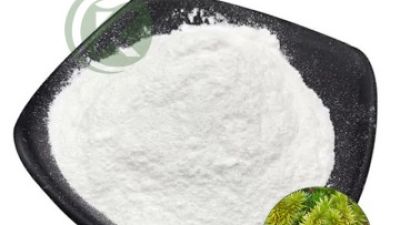
Huperzia Serrata Extract Huperzine A 1% powder is a white powder standardized to 1% Huperzine A and produced from Huperzia serrata. It is natural, non-additive, non-GMO, and treated by heat only, making it suitable for professional formulation and bulk ingredient supply. The material is tested by HPLC and has a two-year shelf life, while GMP, ISO9001, ISO22000, HACCP, KOSHER, and HALAL certifications support quality and production consistency. As a herbal extract and pharmaceutical or cosmetic ingredient, it can serve manufacturers, suppliers, and research-oriented buyers seeking bulk powder and wholesale purchasing options.
FAQS
Request the botanical source, extraction method, assay, moisture, particle size, and bulk density. Ask how the assay was measured. HPLC should identify major isomers, including 3-CQA, 4-CQA, and 5-CQA. A single “total” value may hide important differences.
No. A 98% assay powder and a 50% extract are different materials. Compare cost per active amount, not only cost per kilogram. A higher assay may reduce the required production quantity. I might still compare them incorrectly without checking the assay basis.
Request a batch-specific certificate of analysis and an independent laboratory report. Check the batch number, sampling date, test method, and laboratory qualifications. Review identity, assay, moisture, microbes, heavy metals, pesticides, and residual solvents. A polished document is not proof.
Moisture below 5% is commonly preferred for handling and storage. However, the supplier should support this limit with stability data. Inspect the powder for clumping, especially after humid transport. Small details matter.
Use a sealed inner bag inside an opaque fiber drum. This helps reduce exposure to light and humidity. Confirm lot labels, pallet dimensions, storage conditions, and moisture protection. A damaged seal can quietly affect quality.
Request records from at least three production batches. One attractive sample cannot show normal manufacturing variation. Compare assay, color, moisture, particle size, and microbial results. Retain a sample from every incoming lot.
Record the price per kilogram, sample charges, freight, insurance, customs responsibility, and payment terms. A low factory quotation may become expensive after delivery costs. Compare delivered cost instead. Price is only one variable.
A 5–10 kilogram trial order may limit risk during initial evaluation. Regular production can justify larger price-break discussions. Ask for prices at 25, 100, and 500 kilograms. Bigger is not always wiser.
Confirm lead time, shelf life at shipment, production capacity, packaging, and replacement procedures. Also specify delivery terms, export documents, insurance, and customs responsibilities. Build time buffers for port and clearance delays. Never plan around the best-case transit time.
Review delivery performance, rejected batches, complaint responses, and document accuracy quarterly. Ask about audits, corrective actions, change notifications, and annual specification reviews. A second qualified source can reduce disruption. It must pass the same tests.
Conclusion
Sourcing Chlorogenic Acid Powder in 2026 requires a clear understanding of the ingredient’s intended application, botanical origin, concentration, appearance, solubility, and stability. Buyers should define technical specifications before contacting suppliers, including active-content range, extraction method, particle size, packaging requirements, and expected shelf life. These details help ensure that the selected material is suitable for food, beverage, supplement, cosmetic, or research-related use.
A qualified supplier should provide consistent production capabilities, transparent communication, representative samples, and complete quality documentation. Request recent certificates of analysis, identity and purity test results, microbiological and contaminant reports, safety data, traceability records, and relevant compliance statements. When comparing offers, evaluate more than unit price by reviewing minimum order quantities, lead times, payment terms, packaging, shipping conditions, and production capacity. Before establishing a long-term relationship, verify documentation, delivery performance, quality consistency, and the supplier’s ability to support reliable supply under changing market conditions.