Leave Your Message
*Name Cannot be empty!
* Enter product details such as size, color,materials etc. and other specific requirements to receive an accurate quote. Cannot be empty
0%

Hey, have you checked out Cytisine Powder? It’s been catching the eye of buyers around the world who are after a solid, well-documented ingredient for legit pharmaceutical research and regulated product development. But honestly, its appeal isn’t just about being new or trendy. People really appreciate consistent test results, easy traceability, and clear handling instructions. When it comes down to making a purchase, good evidence matters more than just slick marketing talk.

A trustworthy supplier should always be ready with a current Certificate of Analysis, details about the batch, manufacturing info, and storage recommendations. It’s also smart to get some independent testing done—stuff like confirming the identity and purity, checking moisture levels, and ensuring no bad contaminants are present. While high-performance liquid chromatography data can be handy for technical reviews, one single document usually isn’t enough to cover everything. Don’t forget to look into packaging condition, retest dates, how it’s transported, and any communication logs with the supplier.

These details really do count.

Remember, Cytisine Powder is a pharmacologically active ingredient, so sourcing it responsibly is key—pay attention to things like import rules, quality standards, labeling requirements, and allowed uses, which can differ depending on where you’re buying from. It’s always a good idea to check with qualified regulatory or healthcare folks before placing an order or even using the stuff. This isn’t something to self-medicate with casually, or rely on unsupported health claims. No supplier should promise that every batch will give you perfect results everywhere—that’s kinda reckless. Even the most carefully produced batches might need extra verification once they’ve been shipped, especially since factors like climate, storage time, or local testing methods can affect the outcome. A trustworthy supplier will be upfront about their limitations, answer your technical questions honestly, and support thorough quality checks.

For buyers all over the globe, having this mix of practical know-how, scientific rigor, and regulatory awareness makes Cytisine Powder a much more credible choice for legit, evidence-based development. It’s all about making smart, informed decisions—nothing less.
Why Choose Cytisine Powder for Global Buyers?

Cytisine Powder: Definition, Origin, and Basic Characteristics

Cytisine powder is a plant-derived ingredient containing cytisine, a quinolizidine alkaloid. It is naturally found in the seeds of Laburnum anagyroides and Cytisus scoparius. These yellow-flowering plants have a long history in botanical research. The raw material is usually extracted, purified, and milled into a fine powder. Cytisine Extract Powder may differ in assay, moisture, color, and particle size, depending on processing methods.

Its relevance is supported by clinical evidence, not only traditional use. A 2023 Cochrane Review reported that cytisine improved smoking-cessation outcomes compared with placebo, with a risk ratio of about 1.30. The World Health Organization’s 2023 tobacco trends report estimated 1.25 billion adult tobacco users worldwide. This helps explain continued interest in standardized cytisine materials. However, a strong market does not replace technical verification.

Quality can look simple.

Global buyers should request botanical identification, cytisine assay, residual-solvent testing, heavy-metal limits, microbiological results, and batch traceability. A clean white powder is not proof of purity. In practical purchasing work, inconsistent moisture can affect weighing and downstream formulation. Extraction conditions may also influence alkaloid profiles. Buyers should check whether specifications match local regulatory requirements and the intended, professionally supervised application. Some published data remain limited across populations, and that uncertainty deserves attention. Reliable documentation matters more than attractive product language.

How Cytisine Powder Works in Smoking Cessation Support

Cytisine powder is gaining attention among global buyers because it supports a structured approach to smoking cessation. Its main role is not to replace nicotine casually. It is studied as a medicine-related aid for reducing nicotine dependence. Availability and approval differ between countries, so professional guidance remains important.

How does it work? Cytisine interacts with specific nicotinic acetylcholine receptors in the brain. These receptors normally respond to nicotine. By partially stimulating them, cytisine may ease withdrawal symptoms while reducing the rewarding effect of cigarettes.

Some users describe fewer sudden cravings after several days. The change is usually gradual. It is not a magic switch.

A planned schedule matters. Users may need to reduce smoking during treatment, depending on local medical instructions. Missing doses can weaken the routine, while continuing to smoke heavily may undermine progress. Cytisine Smoking Cessation support works best with behavioral help, such as counseling, trigger tracking, and smoke-free planning.

Evidence is promising, but results are not identical for everyone. More research is still needed across different populations.

Powder quality also deserves close attention. Independent testing, accurate labeling, contamination controls, and suitable storage help support reliable use.

A healthcare professional should review medical history, possible interactions, and country-specific requirements before use.

Key Benefits of Choosing Cytisine Powder for Global Buyers

Cytisine powder appeals to global buyers because it supports flexible, controlled formulation development. Manufacturers can measure precise quantities and reduce unnecessary excipients during early production stages. It may also simplify sampling, stability testing, and batch comparison. However, powder is not automatically superior. Poor storage can affect quality, especially under heat, moisture, or repeated container opening.

Clinical evidence gives cytisine a credible foundation. A 2023 Cochrane Review reported higher smoking-cessation rates than placebo or no treatment, with a risk ratio of about 1.30. The World Health Organization reported approximately 1.25 billion tobacco users worldwide in 2022, showing continued demand for evidence-based cessation options. Yet global buyers need more than demand. They should request identity testing, assay results, impurity profiles, microbiological data, and a complete certificate of analysis. Independent laboratory verification adds reliability. Regulatory documentation matters too, because requirements differ across countries. Cytisine powder should be handled as a controlled pharmaceutical raw material, not as a casual consumer product. Some purchasing decisions still focus too heavily on price. That is a weakness. A lower-cost batch may create greater expenses through failed testing, delayed clearance, or inconsistent formulation performance.

Quality Standards and Testing Requirements for Cytisine Powder

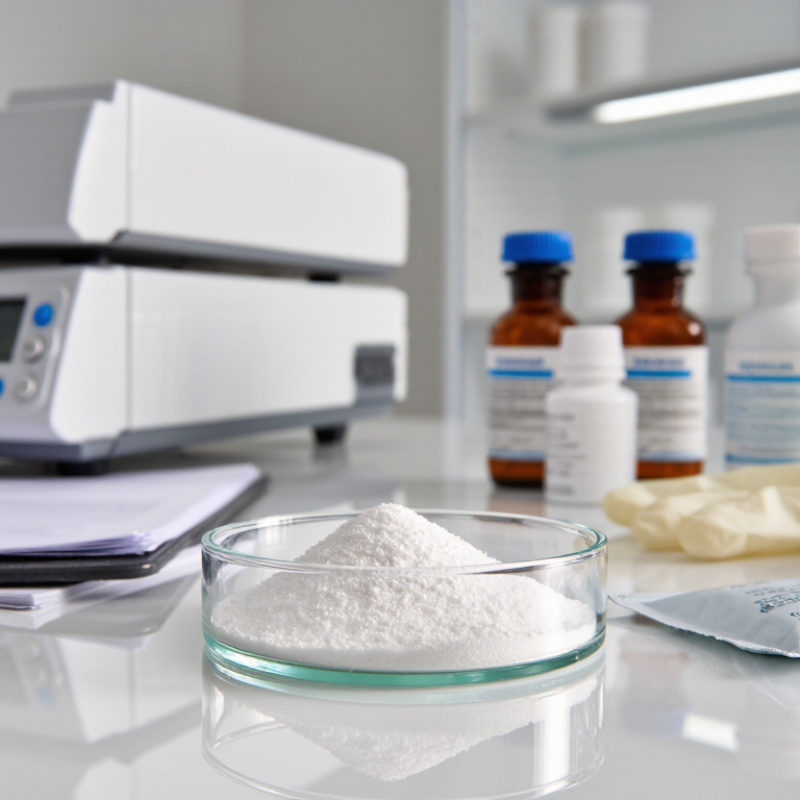
Global buyers should treat Herb Extract Cytisine as a tested material, not merely a powder with an attractive certificate. A credible specification should state identity, assay, related substances, moisture, residual solvents, and microbiological limits. HPLC or LC-MS can confirm identity, while Karl Fischer testing measures water content. Gas chromatography is useful for residual solvents. One number is not enough.

The 2023 ICH Q2(R2) guideline emphasizes specificity, accuracy, precision, detection limits, and quantitation limits during analytical validation. USP General Chapter also describes chromatographic system suitability expectations. Buyers should request chromatograms, reference-standard details, test dates, and laboratory accreditation under ISO/IEC 17025:2017. A COA without raw data deserves questions. It may still be correct, but trust should be demonstrated.

For each lot, suppliers should provide a traceable batch number, sealed sample, storage conditions, and testing performed on the finished powder. Three production batches can reveal process variation more clearly than one polished result. Botanical materials can change with harvest, drying, and extraction conditions. That weakness is easy to overlook. I would also compare the reported assay with an independently tested retention sample before approving repeat purchases. Small discrepancies are not automatically failures, but unexplained differences require investigation.

Why Choose Cytisine Powder for Global Buyers? - Quality Standards and Testing Requirements for Cytisine Powder

Quality Dimension Relevant Data for Cytisine Recommended Test Method Reference Standard or Guidance Buyer Acceptance Approach
Chemical Identity Cytisine; CAS Registry Number: 485-35-8; molecular formula: C11H14N2O; relative molecular mass: approximately 190.24 g/mol. Comparison of HPLC retention time with an authenticated reference standard, supported by FTIR, LC-MS, or NMR where required. ICH Q2(R2) for analytical procedure validation; USP General Chapter for chromatographic principles. The sample should match the reference standard and show no unexplained principal peak inconsistent with cytisine.
Assay or Purity Assay should be reported on a clearly defined basis, such as as-is basis or dried basis. The exact specification must be agreed in the purchase specification because no single universal commercial limit applies to every intended use. Validated HPLC or UPLC method with suitability, specificity, accuracy, precision, linearity, range, and solution stability demonstrated. ICH Q2(R2); USP . Release only when the measured result meets the mutually approved assay range and the chromatographic system suitability criteria.
Related Substances and Degradation Products The specification should control individually specified impurities, any unspecified impurity, and total impurities. Limits depend on the intended use, toxicological assessment, and regulatory pathway. Stability-indicating HPLC or UPLC method using a validated impurity profile and impurity reference materials where available. ICH Q3A for drug-substance impurities; ICH Q2(R2) for method validation. Require an impurity chromatogram, individual impurity results, total impurity result, and defined reporting thresholds.
Water Content Water content can influence assay calculation, powder flow, storage stability, and susceptibility to degradation. The limit should be set according to the product form and stability data. Karl Fischer titration is generally preferred when measuring water specifically; loss on drying may be used when volatile substances are appropriately controlled. USP for water determination; relevant pharmacopoeial loss-on-drying procedures where applicable. Report the numerical result, test method, sample preparation, and agreed maximum limit.
Residual Solvents Residual-solvent control is based on the solvents used during manufacturing. Class 1 solvents should generally be avoided; Class 2 and Class 3 solvents require control according to their permitted exposure limits. Headspace gas chromatography with flame-ionization detection or mass-spectrometric detection. ICH Q3C(R8); USP . The supplier should provide a solvent-use statement and numerical results for relevant solvents against applicable ICH limits.
Elemental Impurities Potentially hazardous elements include arsenic, cadmium, mercury, lead, and other elements relevant to the manufacturing route and intended daily exposure. Inductively coupled plasma mass spectrometry or inductively coupled plasma optical emission spectrometry, as appropriate. ICH Q3D(R2); USP and USP . Evaluate results using the applicable permitted daily exposure and the product’s intended route of administration.
Microbial Quality Microbial limits depend on whether the powder is intended for pharmaceutical, nutraceutical, research, or other use. The required organisms and limits should be stated before purchase. Total aerobic microbial count, total combined yeasts and molds count, and tests for specified microorganisms. USP and USP ; Ph. Eur. 2.6.12 and 2.6.13 where applicable. Require a microbial test report with results reported as CFU/g and a clear statement of compliance with the agreed limits.
Physical Appearance A consistent powder should be described by color, odor, texture, visible foreign matter, and packaging condition. Appearance alone cannot confirm identity or purity. Visual inspection under defined lighting, with optional microscopy or particle-size examination. Approved internal specification and documented visual inspection procedure. The lot should be free from visible contamination, abnormal discoloration, and damaged or improperly sealed packaging.
Particle-Size Distribution Particle size affects blending, dissolution, flowability, sampling uniformity, and downstream processing. No single particle-size range is universally suitable for all applications. Laser diffraction, sieve analysis, or another validated method appropriate to the powder characteristics. USP for particle-size measurement by dynamic light scattering or laser diffraction principles, where applicable. Specify D10, D50, D90, sieve fraction, or another measurable parameter only when it is relevant to the application.
Packaging and Storage Cytisine powder should be protected from moisture, excessive heat, direct light, and contamination. The exact storage condition must be supported by stability data. Packaging-integrity inspection and review of stability or transport studies under defined conditions. ICH Q1A(R2) for stability testing principles; applicable pharmacopoeial container requirements. Confirm container-closure suitability, lot number, net weight, manufacturing date, retest or expiry date, and storage instructions.
Batch Traceability Each shipment should be traceable to one defined production batch and supported by consistent manufacturing and testing records. Document review, certificate-of-analysis verification, and, when required, independent laboratory testing. Good Manufacturing Practice principles and applicable national pharmaceutical regulations. The certificate of analysis should include batch number, test dates, methods, specifications, results, analyst approval, and release status.

Note: Acceptance limits for cytisine powder are not universally identical. Global buyers should approve a product specification based on intended use, route of administration, applicable jurisdiction, manufacturing process, toxicological assessment, and stability data.

Sourcing, Manufacturing, and Supply Chain Considerations

Why Choose Cytisine Powder for Global Buyers?

Cytisine powder attracts global buyers seeking a traceable pharmaceutical ingredient for smoking-cessation development. The opportunity is substantial. The WHO Global Report on Tobacco Use 2000–2030 estimates that about 1.25 billion adults used tobacco in 2022. However, purchasing decisions should begin with quality, not volume. Buyers should request identity testing, assay results, residual-solvent data, heavy-metal limits, microbiological results, and a signed certificate of analysis. Every batch should have a clear lot number and retained sample.

Manufacturing discipline matters. Suppliers should follow documented GMP procedures and apply risk controls aligned with ICH Q7 principles. Ask about raw-material qualification, equipment cleaning, process validation, deviation handling, and stability studies. A clean production room is useful. It is not proof by itself. Independent laboratory confirmation adds confidence, especially when specifications vary between markets. Buyers must also verify lawful intended use, import rules, labeling requirements, and applicable pharmaceutical controls before shipment.

Supply chains need equal attention. The World Bank’s Logistics Performance Index 2023 assessed 139 economies and highlighted persistent differences in customs, infrastructure, and delivery reliability. Therefore, request temperature and humidity guidance, packaging photographs, export documents, and a realistic lead-time plan. Use dual sourcing when continuity is critical. Yet, dual sourcing can create inconsistent specifications. That risk is often underestimated. A lower quotation may hide weak traceability, delayed testing, or costly customs corrections. Supplier audits, staged payments, and pre-shipment release testing provide practical safeguards. No checklist replaces reviewing a failed-batch investigation.

Regulatory, Safety, and Compliance Factors in International Trade

Why Choose Cytisine Powder for Global Buyers?

Regulatory, Safety, and Compliance Factors in International Trade

International buyers should treat cytisine powder as a regulated pharmaceutical material, not an ordinary commodity. Requirements differ between exporting and importing countries. A legal shipment may require product classification, import permits, customs declarations, and approved labeling. Searches such as “Cytisine Buy” are only a starting point. They do not confirm legal market access.

Reliable suppliers should provide a current certificate of analysis, safety data sheet, batch number, and manufacturing records. Independent testing can verify identity, purity, residual solvents, heavy metals, and microbial limits. Good documentation matters. It supports traceability when a shipment reaches a warehouse or laboratory. Buyers should also check whether the facility follows suitable quality standards, such as applicable good manufacturing practices.

Safety review deserves equal attention. Cytisine can have pharmacological effects and may cause adverse reactions or interactions. It should be handled according to professional guidance and the destination country’s approved use. Packaging must protect the powder from moisture, heat, and accidental exposure. Clear hazard information is essential.

A paperwork gap can delay customs clearance. Worse, it can create a product-quality question. I have found that small inconsistencies deserve careful review, even when the supplier appears experienced. A certificate date, lot number, or translated label may not match. That is easy to miss. Compliance teams should confirm every detail before payment, shipment, and local distribution.

FAQS

What is cytisine powder?

Cytisine powder is a plant-derived ingredient containing a quinolizidine alkaloid. It is usually extracted, purified, and milled into a fine powder. Its color, moisture, assay, and particle size can vary by processing method.

Where does cytisine naturally occur?

Cytisine occurs naturally in the seeds of certain yellow-flowering plants. These plants have a long history in botanical research. Botanical identification should confirm the raw-material source.

What testing should buyers request?

Buyers should request identity testing, cytisine assay, moisture results, and residual-solvent data. Heavy-metal limits and microbiological results are also important. A white powder is not proof of purity.

Why is batch traceability important?

Each batch should have a clear lot number, certificate, and retained sample. Traceability helps connect test results with the actual shipment. It also supports investigation if results later seem inconsistent.

How should manufacturers control production quality?

Manufacturers should document raw-material approval, equipment cleaning, and process validation. They should record deviations and maintain suitable stability data. A clean room helps. It proves less than some people assume.

What supply-chain details should international buyers check?

Buyers should review packaging photographs, export documents, lead times, and storage guidance. The powder may need protection from moisture and heat. Customs performance can differ greatly between countries.

What regulatory checks are needed before shipment?

Buyers should confirm product classification, import permits, labeling rules, and pharmaceutical controls. Requirements differ between exporting and importing countries. A legal shipment elsewhere may still fail local entry requirements.

What safety information should be considered?

Cytisine can have pharmacological effects, adverse reactions, and possible interactions. Use should follow professional guidance and approved local requirements. Clear hazard information should accompany the material.

How can buyers reduce purchasing risks?

Independent laboratory testing can verify identity, purity, solvents, metals, and microbial limits. Staged payments and pre-shipment release testing may reduce exposure. Dual sourcing can improve continuity, but specifications may drift between suppliers.

What common documentation problems deserve attention?

Check whether the certificate date, lot number, and translated label match. A small mismatch can delay customs clearance or raise quality questions. I may be overly cautious, but these details are easy to miss.

Conclusion

Cytisine Powder is a naturally derived active ingredient traditionally obtained from plants in the legume family and studied for its role in smoking cessation support. By interacting with specific nicotine-related receptors, it may help reduce cravings and withdrawal discomfort when used according to appropriate professional guidance. For global buyers, its potential benefits include a well-defined functional profile, suitability for further formulation, and growing interest in evidence-based cessation products.

Responsible sourcing requires careful attention to identity, purity, potency, contaminant limits, stability, packaging, and batch-to-batch consistency. Buyers should work with qualified manufacturers that provide reliable testing records, traceable supply chains, and documented quality systems. International trade also requires review of local rules concerning classification, labeling, permitted uses, safety information, import procedures, and product claims. Clear technical documentation and regulatory consultation can help ensure that Cytisine Powder is handled safely and supplied in a compliant, transparent manner.
Sophia

Sophia

Sophia is a dedicated marketing professional at Xi'an KINTAI Biotech Inc., where she plays a pivotal role in promoting the company's innovative products. With a profound understanding of the biotechnology industry, she ensures that the company's commitment to quality is reflected in all aspects of......
Previous What Is Daidzein Powder Used For?