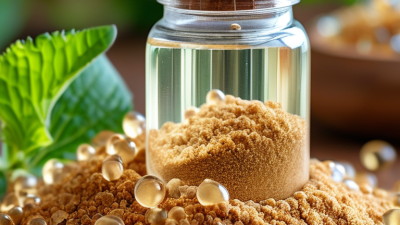
So, Resveratrol Powder is definitely catching people's attention these days, especially as wellness brands keep expanding what they offer. You know, Grand View Research actually put the global dietary supplements market at around USD 177.5 billion back in 2023, and they're projecting it to grow at about 9.1% annually from 2024 to 2030. That's a pretty solid overall trend, but it doesn't really tell us much about resveratrol sales on their own.
So, buyers often go for powder because they can weigh it, mix it into capsules, or tweak it into custom blends. But here's the thing—just because it looks good doesn't mean it's legit. Procurement teams don't just eyeball it; they dig into the botanical source, check assay results, ensure batch consistency, and run contaminant tests. And that certificate of analysis? That's their proof for identity and purity for a specific batch. Yeah, details really count.
People are pretty interested in resveratrol, that compound you find in grapes and other foods — and sure, there's ongoing research around it. But hey, just because scientists are studying something doesn't mean it's a proven health miracle. The NIH's Office of Dietary Supplements actually tells folks to be careful: check supplement safety and talk to your doctor about possible interactions. And honestly, the evidence for specific benefits is often limited or all over the place. That's a big deal, and it's worth keeping in mind.
When you're shopping around, popularity isn't the whole story, you know? Sure, it matters, but price, reliable documentation, and whether the supplier can keep the specs consistent—that's what really makes you come back for more. And honestly, the whole picture isn't as tidy as it seems: marketing claims often outpace the clinical evidence. So you've got to be a bit careful and compare what's actually verified in the data versus those vague wellness promises. You know, it's interesting why Resveratrol Powder gets so much attention from buyers. In this article, we'll explore what pulls them in, what they check out before buying, and also where you really need to be careful when evaluating it. Because, honestly, not everything is black and white.
What Resveratrol Powder Is and Where It Comes From
Resveratrol is a naturally occurring plant compound in a group called polyphenols. Plants produce it as part of their response to stress. It occurs in grape skins, some berries, peanuts, and Japanese knotweed. The amount varies with the plant species, growing conditions, and processing. A grape is not a fixed-dose ingredient.
Commercial resveratrol powder is commonly made from plant extracts, often sourced from Japanese knotweed or grapes. The raw material is processed to separate and concentrate the compound, then dried into powder. Methods and quality controls differ between suppliers. That matters. The phrase Pure Resveratrol Powder may describe a product, but it does not prove its identity or purity.
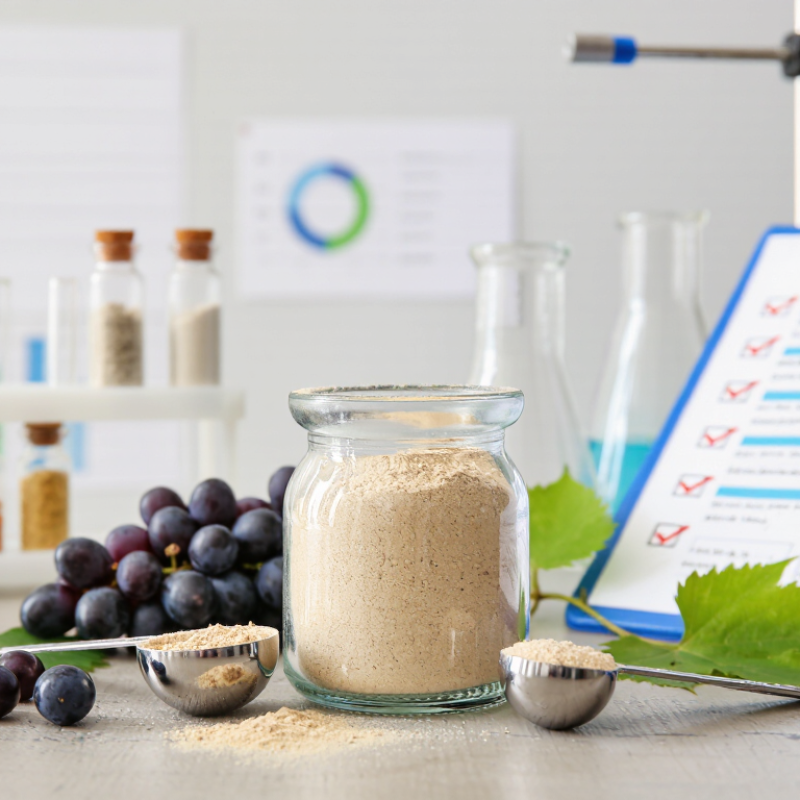
For a clearer picture of where a powder comes from, buyers can check whether the supplier identifies the botanical source and provides independent test results. Useful details include the resveratrol assay, contaminants, and residual solvents. Even then, a certificate needs careful reading; it may cover only a particular batch. Powder form also says little about how the ingredient behaves in a finished product. Solubility, particle size, and formulation can all matter, so origin is a useful starting point, not the whole story.
Why Is Resveratrol Powder Popular Among Buyers?
Resveratrol is a plant-derived polyphenol found in sources such as Japanese knotweed, grape skins, and peanuts. Its molecular formula, C₁₄H₁₂O₃, describes the atoms in one molecule—not the amount found in any particular plant or powder.
The chart shows resveratrol’s molecular composition. Buyers may be drawn to its plant origins and convenient powder format; actual resveratrol content can vary by source and product.
How Resveratrol Powder Is Produced
Resveratrol powder is commonly made from plant material, such as Japanese knotweed roots or grape skins. The chosen source is cleaned, dried, and milled into smaller pieces. This helps prepare it for extraction. The plant compounds are then separated using a suitable solvent, though the exact method varies by producer. That variation matters.
After extraction, the liquid is filtered and concentrated. Further purification can separate resveratrol from other plant compounds. Some processes use crystallization, followed by careful drying and milling, to create a fine powder. White Resveratrol Powder describes an appearance, not a guarantee of purity. Natural extracts may vary in shade, and processing can affect color and texture. A very white sample is not automatically better.
Reliable production also involves checking the finished material. Testing may assess identity, resveratrol content, residual solvents, microbes, and contaminants such as heavy metals. Results should be supported by clear quality records, not appearance alone. Storage matters, too: heat, light, and moisture can affect stability. Powder can look uniform in a jar, yet still need proper testing. That is easy to overlook.
What Makes Powder Form Appealing to Buyers
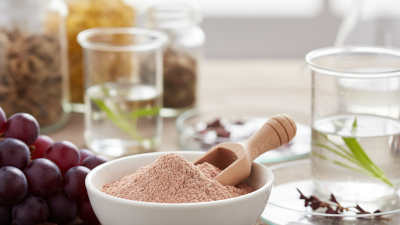
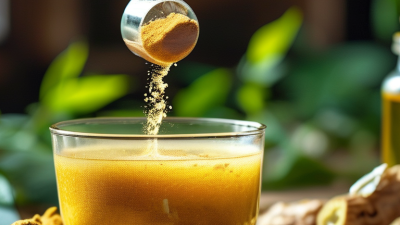
Powder form appeals to buyers who want flexible serving sizes and simple ingredient lists. Resveratrol White Powder can be measured into a smoothie, yogurt, or other suitable food, depending on product directions. A small scoop is easy to store. The format may also suit people who prefer adjusting a serving rather than swallowing capsules. Still, powder is not automatically more effective or easier for everyone.
For practical use, buyers often consider how the powder dissolves, whether it has a noticeable taste, and how clearly the serving size is stated. A fine texture may blend more smoothly, while clumps can make measuring less convenient. Use a clean, dry scoop and close the container promptly. Moisture and heat can affect storage quality, so follow the label’s instructions.
There is a trade-off. Measuring powder requires care, and household spoons are not reliable substitutes for a proper measuring tool. Check the ingredient list, batch information, and available quality-testing details before buying. These details can be more useful than broad marketing claims, though they do not guarantee a particular result. Buyers should also review cautions on the label and consult a qualified health professional when they have questions about supplements.
Key Reasons Behind Its Growing Popularity
Resveratrol powder appeals to buyers who want flexibility in formulation. Unlike pre-measured capsules, a powder can be weighed and blended into different products by manufacturers or qualified formulators. It also takes up relatively little storage space. Small details matter: a fine powder may disperse differently from a coarse one, and resveratrol does not dissolve readily in water. That can affect how a product is made and used.
Buyers often compare the stated resveratrol content, ingredient source, and batch-specific test results. A certificate of analysis can help verify identity and purity, though it should be current and linked to the actual batch. Look for testing information on contaminants, too. Not every label tells the whole story. Powder quality and concentration can vary, so the word “Pure” alone is not enough to judge a product. Resveratrol is widely discussed in nutrition research, but findings do not establish that every supplement provides a specific benefit. The evidence can be uneven. That uncertainty is worth keeping in view when comparing products.
Why Is Resveratrol Powder Popular Among Buyers? – Key Reasons Behind Its Growing Popularity
| Buyer Interest | Relevant Fact | Why It May Matter to Buyers |
| Recognizable plant sources | Resveratrol is a naturally occurring polyphenol found in foods such as grapes, some berries, and peanuts. | Buyers interested in plant-derived ingredients may find its natural occurrence appealing. The amount in foods varies and should not be equated with a supplement dose. |
| Flexible product formulation | Powder is a format that can be measured and incorporated into suitable supplement or research formulations. Its use and handling depend on the specific product and its instructions. | Some buyers value the ability to select a powder format rather than a pre-portioned capsule or tablet. |
| Interest in Antioxidant research | Resveratrol has been studied for biological effects, including its antioxidant activity. Research findings do not establish that taking a supplement prevents or treats disease. | Scientific interest can prompt consumers to learn about the ingredient, while careful buyers may also look for clear information about the limits of the evidence. |
| Choice of ingredient format | Resveratrol supplements are available in different forms, including powders and finished products. Form alone does not establish purity, quality, or effectiveness. | Powder gives buyers another format to compare when considering ingredients, serving information, testing, and product suitability. |
| Ability to review serving details | Supplement labels provide product-specific serving and ingredient information; serving sizes and formulations can differ between products. | Buyers can compare the stated amount per serving and other label details instead of assuming that all resveratrol powders are equivalent. |
| Continued consumer curiosity | Evidence on resveratrol supplements and health outcomes in people remains limited, and results from laboratory or animal studies do not necessarily apply to humans. | Interest in emerging research may contribute to product attention, but popularity should not be taken as proof of a health benefit. |
Evidence note: This table describes plausible reasons buyers may consider the powder format; it does not quantify market growth or claim that resveratrol supplements provide proven health benefits. For an overview of the evidence and safety considerations, see the U.S. National Center for Complementary and Integrative Health’s resveratrol information.
How Buyers Compare Quality and Product Options
Buyers comparing resveratrol powders should look beyond price and front-label claims. Grand View Research’s resveratrol market report estimated the global market at USD 88.4 million in 2022 and projected an 8.9% compound annual growth rate through 2030. That growth reflects broader interest, but it does not make every powder equivalent. Check whether the label specifies trans-resveratrol content, serving size, source material, and other ingredients. Small details matter.
A batch-specific certificate of analysis should show identity and purity results, ideally from an independent laboratory. Compare the tested batch number with the product packaging; a generic certificate offers less reassurance. Also check whether the powder includes carriers or flow agents, since they affect what each scoop contains.
The Council for Responsible Nutrition’s 2023 Consumer Survey found that 74% of U.S. adults use dietary supplements. That figure covers supplements broadly, not resveratrol buyers specifically. It does, however, underline why clear quality information matters. A polished label is useful, but it cannot replace transparent testing. I would still treat a missing test method as a question, not proof of poor quality.
Safety, Labeling, and Purchasing Considerations
Resveratrol powder attracts buyers who want a clearly measured ingredient and flexible serving options. Yet the powder’s appearance tells little about its quality. Check the label for the amount of resveratrol per serving, the full ingredient list, storage instructions, and an expiration date. “Micronized Resveratrol Powder” describes particle size, not a guarantee of purity, safety, or better results. That distinction matters.
Look for accessible information about identity and contaminant testing, ideally tied to the product’s batch. A seller should be able to explain what its testing covers, rather than relying on broad phrases such as “high quality.” Check whether the scoop size matches the stated serving; small measuring errors can add up. Small detail, big difference. A label can look precise and still leave questions.
Resveratrol may interact with medicines, and supplement needs vary. People taking medication, preparing for surgery, or managing a health condition should ask a qualified healthcare professional before use. Also consider how the powder is packaged: a tight seal and clear storage guidance help limit exposure to moisture and heat. The micronized term can sound reassuring, but it is only one purchasing detail, not a shortcut to confidence.
Botanical Extracts Market Outlook: Grand View Research Report and Why Buy Shikimic Acid Powder
The botanical extracts market continues to attract interest from manufacturers seeking plant-derived ingredients with consistent specifications and traceable sources. As buyers compare suppliers, quality controls, clear testing methods, and dependable documentation can be as important as the botanical origin. Shikimic acid powder from star anise seeds offers a defined option for ingredient development, research, and formulation work where batch consistency matters.
This natural powder is specified at 98% shikimic acid and has a white appearance. Its identity and purity are tested using HPLC, while a two-year shelf life supports practical inventory planning when stored appropriately. Production follows a heat-only treatment approach and avoids additives and genetically modified material. GMP, ISO 9001, ISO 22000, HACCP, Kosher, and Halal certifications provide additional quality and process information for buyers assessing supply requirements.
For procurement teams, bulk availability can help support ongoing production needs, while a 100,000-level clean production workshop reflects attention to manufacturing conditions. When evaluating shikimic acid powder, buyers can review the specification, test documentation, source details, and certification records to determine whether the ingredient aligns with their intended application and quality standards.
Conclusion
Resveratrol Powder is a powdered form of resveratrol, a naturally occurring compound found in certain plants, including grapes and Japanese knotweed. It is typically produced by extracting and refining the source material, then processing the resulting ingredient into a powder. Buyers may find this format appealing because it can be measured, stored, and incorporated into different product formulations with relative ease. Interest in Resveratrol Powder has grown alongside broader demand for plant-derived ingredients and flexible options for product development.
When comparing products, buyers often review the stated source, ingredient composition, processing details, and available quality documentation. Clear labeling can help them understand serving information, additives, and storage guidance, while consistent specifications make it easier to assess options. Purchasing decisions should also take account of product quality controls and supplier transparency. Resveratrol Powder is not automatically suitable for everyone, so consumers should follow label directions and seek qualified advice when considering whether an ingredient is appropriate for their individual circumstances.