

Pharm Ingredients

Caffeic Acid Powder
Caffeic Acid Powder Manufacturer
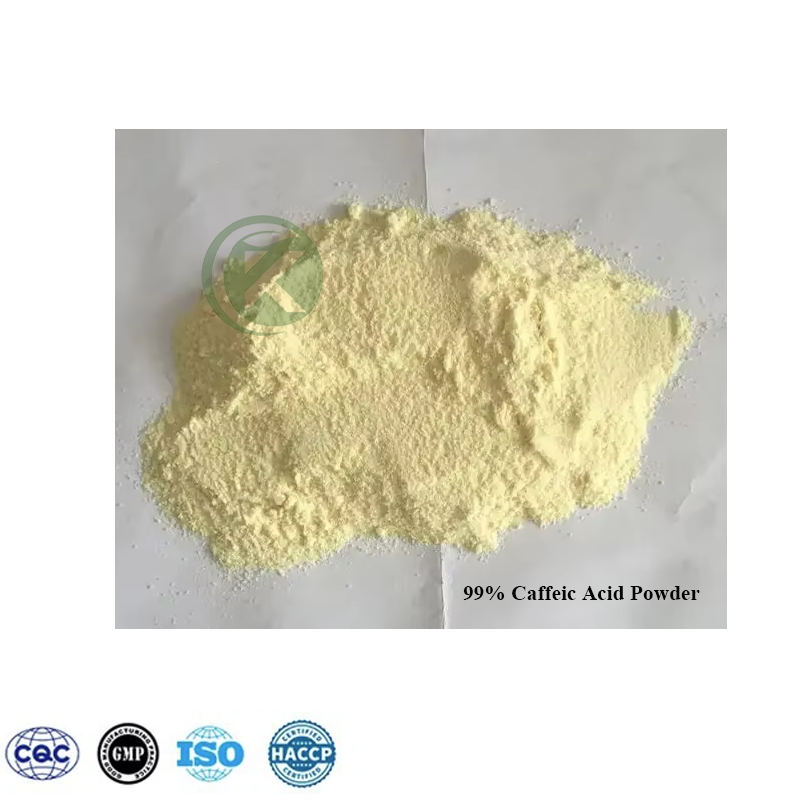
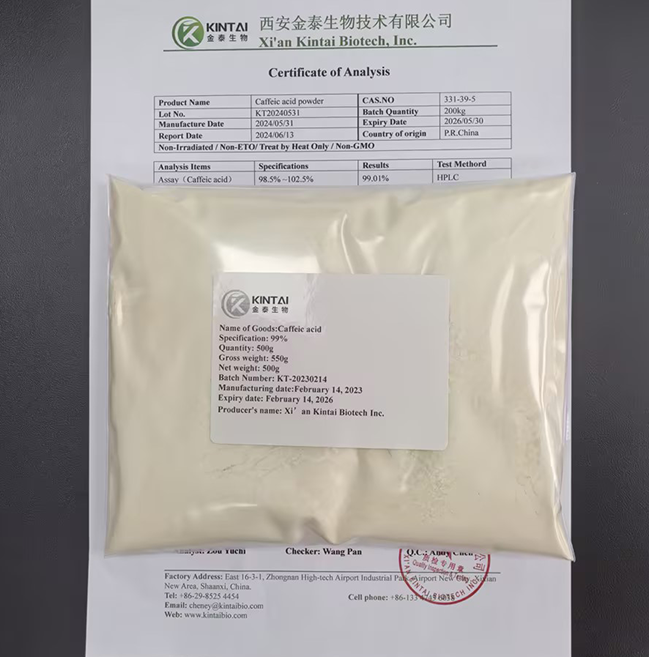
Kintainutri® manufacturer supplys high-quality 99% caffeic acid powder for sale. As a leader herbal extract factory certified with cGMP ISO HACCP qualifications, we strictly follow the cGMP standard to ensure good quality.
Caffeic acid (3 4 Dihydroxycinnamic Acid) is a highly active natural phenolic acid organic compound. Due to its excellent antioxidant, anti-inflammatory, antibacterial, cardiovascular protective, and metabolic regulation activities, it has become a core raw material in the global pharmaceutical and health industry, with broad market development prospects and wide application in the fields of medicine, food, health products, and cosmetics.
Caffeic Acid Food Sources
Caffeic acid belongs to the class of hydroxycinnamic acid natural polyphenolic organic acids. It exists mostly in free or ester form and is an important secondary metabolic intermediate in plants, widely distributed in various plants.
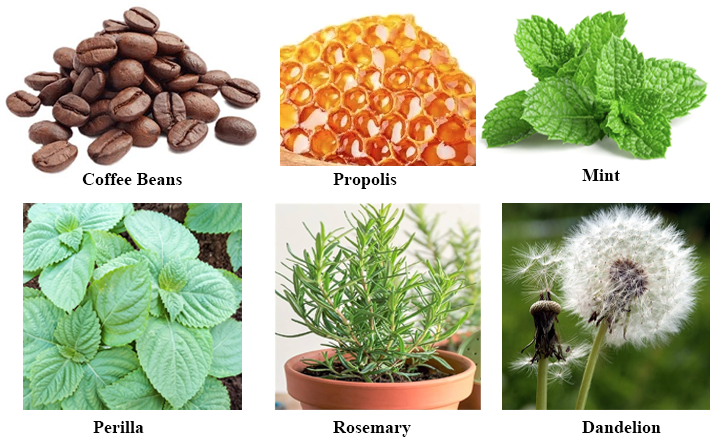
It is commonly found in coffee beans, red wine, propolis, perilla, rosemary, fruits, whole grains, dandelion, honeysuckle, tomatoes, carrots, mint, and various berries and medicinal plants.
How to Dissolve Caffeic Acid Powder?
Caffeic acid powder is slightly soluble in cold water but readily soluble in hot water; it is soluble in organic solvents such as ethanol, DMSO and dimethylformamide. Its solubility in ethanol is approximately 25 mg/ml, in DMSO and DMF it is approximately 5 mg/ml, and in PBS (pH 7.2) it is approximately 0.5 mg/ml.
Contact us Specification of Caffeic Acid Powder
| Analysis Items | Specification | Test Method |
|---|---|---|
| Assay (Caffeic Acid) | 98.5%—102.5% | HPLC |
| Identification | Positive | TLC |
| Appearance | Light Yellow Powder | Visual |
| Odour | Slight, specific | Organoleptic |
| Color of Solution (1% ethanol) | Colorless to yellow to brown | Visual |
| Melting Point | 194℃—198℃ | - |
| Particle Size | ≥98% Through 80 mesh | Ch.P.C.Rule 47 |
| Chloride | ≤0.01% | Atomic Absorption |
| Loss on Drying | ≤5.0% | Ch.P.C.Rule 52 |
| Heavy Metals | ≤10.0 ppm | Atomic Absorption |
| Cadmium (Cd) | ≤1.0 ppm | Atomic Absorption |
| Mercury (Hg) | ≤1.0ppm | Atomic Absorption |
| Arsenic (As) | ≤2.0 ppm | Atomic Absorption |
| Lead (Pb) | ≤1.0 ppm | Atomic Absorption |
| Total Plate Count, cfu/g | ≤1000 cfu/g | Ch.P.C.Rule 80 |
| Mold and Yeast Count, cfu/g | ≤100 cfu/g | Ch.P.C.Rule 80 |
| E.coli | Negative | Ch.P.C.Rule 80 |
| Salmonella | Negative | Ch.P.C.Rule 80 |
| Staphylococcus aureus | Negative | Ch.P.C.Rule 80 |
| Conclusion | Conform to Specification and Standards. |
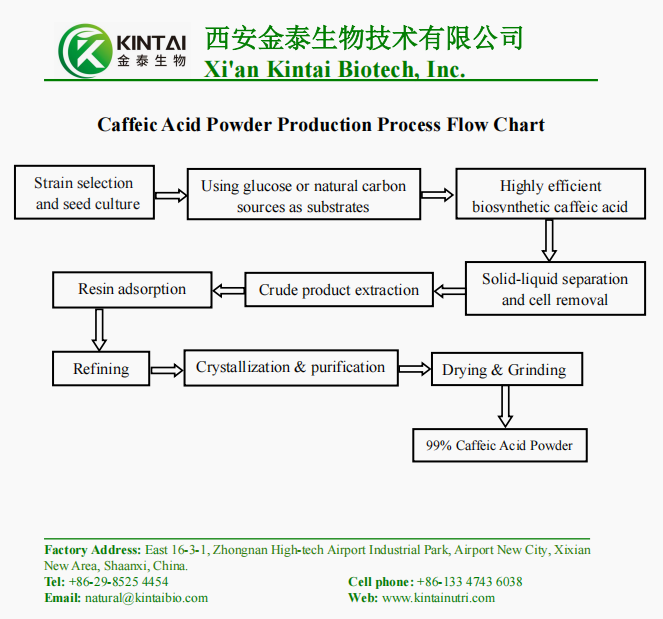
How to make caffeic acid Powder?
What are the benefits of caffeic acid Powder?
Caffeic Acid Powder For Antioxidant
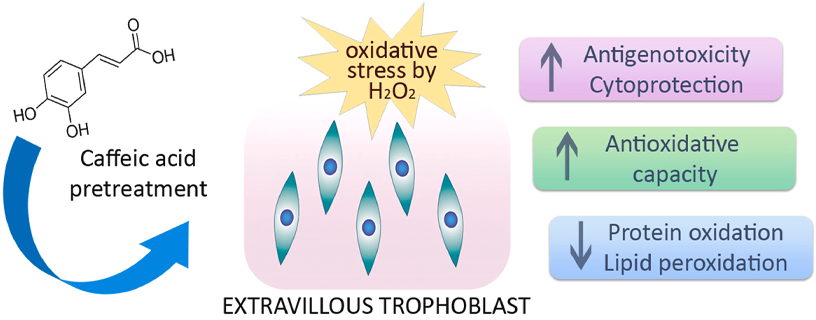
The aromatic ring, conjugated side chain, and ortho-hydroxyl group in the caffeic acid structure endow it with excellent antioxidant capabilities. It can both directly provide hydrogen atoms to scavenge free radicals and chelate metal ions to prevent the formation of free radicals.
In addition, it can inhibit the generation of reactive oxygen species and activate antioxidant enzyme systems in the body, such as SOD and CAT, significantly reducing oxidative stress levels induced by ultraviolet radiation and high blood sugar. By protecting cells and DNA from oxidative damage, caffeic acid can effectively delay aging and provide key protection against arteriosclerosis, diabetes, tumors, and neurodegenerative diseases.
Does caffeic acid powder cause cancer?
As a natural polyphenol with dual oxidative regulatory properties, caffeic acid has shown significant adjuvant and therapeutic potential in cancer treatment. In terms of prevention and anti-cancer mechanisms, it can promote cancer cell apoptosis by inducing mitochondrial apoptosis, while simultaneously inhibiting key signaling pathways such as NF-κB, STAT3, and ERK1/2, reducing the levels of inflammatory factors such as TNF-α and IL-6, and inhibiting the activity of COX-2, iNOS, and MMP-2/9, thereby blocking tumor inflammation, angiogenesis, and metastasis.
In addition, caffeic acid powder can be used as an ideal adjuvant for chemotherapy and radiotherapy. It can reverse chemotherapy resistance by inhibiting the P-glycoprotein efflux pump, and has a synergistic effect with drugs such as cisplatin, 5-fluorouracil, doxorubicin and paclitaxel. At the same time, it can reduce chemotherapy-induced nephrotoxicity and protect normal cells from radiation-induced DNA damage and oxidative stress.
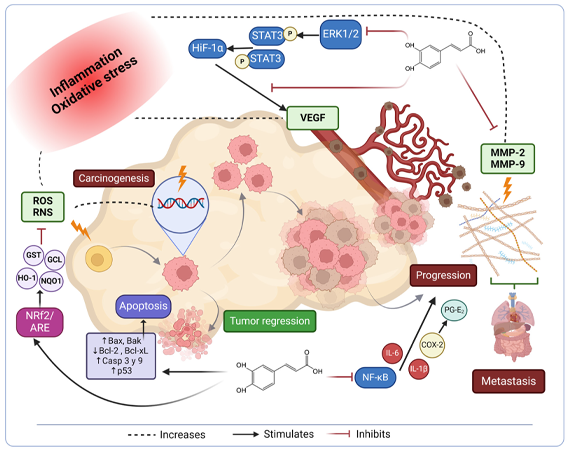
With its excellent safety profile and mild adverse reactions, 3 4 Dihydroxycinnamic Acid has shown significant development value in the fields of cancer prevention and adjuvant therapy for tumors, and is a highly promising candidate drug in the development of new anti-tumor drugs.
Caffeic acid Powder For Diabetes
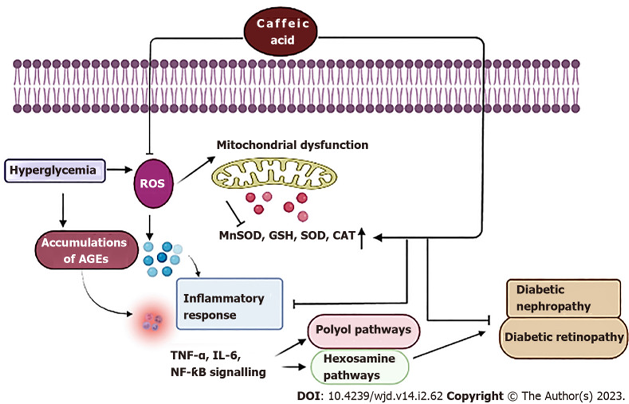
Caffeic acid can effectively regulate glucose and lipid metabolism disorders through multiple pathways, including promoting insulin secretion, inhibiting amylase and glucosidase activity, reducing glucose absorption, and regulating hepatic glucose metabolism.
Simultaneously, it can activate the Nrf2/ARE antioxidant pathway, increase the activity of enzymes such as SOD, CAT, and GPx, and reduce the levels of inflammatory factors, significantly alleviating oxidative stress and inflammatory damage induced by hyperglycemia. As a high-quality pharmaceutical raw material, our caffeic acid powder is used in research and product development for the treatment of diabetes and its complications.
Caffeic Acid Powder on Brain-Related Diseases
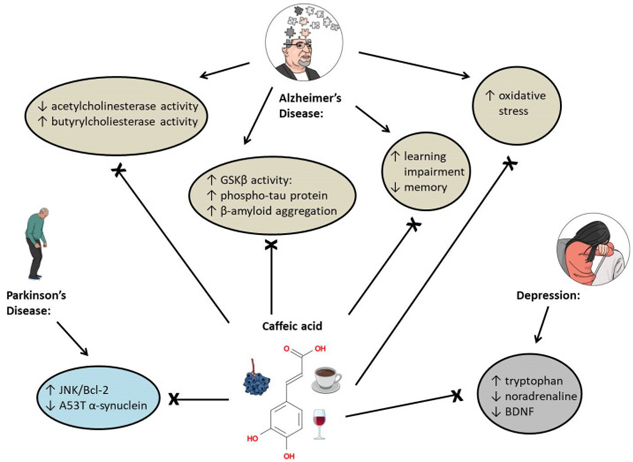
According to research, caffeic acid exhibits significant neuroprotective effects against a variety of brain-related diseases. In Alzheimer's disease, it not only improves memory and learning impairments and enhances cognitive function, but also reduces β-amyloid protein aggregation and tau protein phosphorylation by inhibiting GSK3β activity. Simultaneously, it alleviates oxidative stress and inflammation in the brain by inhibiting the NF-κB pathway and regulating cholinesterase activity.
In the treatment of depression, caffeic acid powder can restore abnormal levels of norepinephrine and tryptophan and promote the expression of brain-derived neurotrophic factor (BDNF). In Parkinson's disease, it can activate the autophagy pathway and reduce levels of mutant α-synuclein to protect neurons.
These findings indicate that 3 4 Dihydroxycinnamic Acid, as a high-quality raw material, has good market potential and product development value in the development of neuroprotective dietary supplements.
what is caffeic acid Powder used for?
With the continued growth in global demand for natural and functional ingredients, the caffeic acid market shows great promise. In skincare formulations, caffeic acid, due to its stable molecular structure and resistance to oxidation, is widely used in products such as serums, creams, and toners. caffeic acid is also commonly used as a base additive in dietary supplements, solid beverages, tablets and compressed candies.
It uses 99% high-purity caffeic acid powder produced by Kintainutri®, with very few impurities, which can precisely inhibit the growth of microorganisms and lipid oxidation, effectively extending the shelf life of beverages and baked goods while maintaining color stability.
Where to buy caffeic acid Powder?
As a professional supplier deeply rooted in the field of plant extraction and biosynthesis, Kintainutri® provides global customers with industry-leading 99% 3 4 Dihydroxycinnamic Acid raw materials, thanks to its outstanding R&D capabilities and comprehensive international quality certification system.
In terms of product technology, we have abandoned the drawbacks of traditional extraction and chemical synthesis and innovatively adopted advanced bio-fermentation synthesis technology.
This not only solves the problems of environmental protection and sustainable production from the source, but also greatly improves the water solubility and bioavailability of caffeic acid through unique microbial processing. It perfectly solves the application pain points of poor solubility and easy clumping of this ingredient in food, health products and cosmetics formulas.
Whether you require high-purity, customized specifications or a stable, large-volume supply, partnering with us ensures the security of your caffeic acid supply chain and helps you create more competitive end products. If interested, please contact us for caffeic acid powder samples and the latest quote.
*Kintainutri® Promise All Products: Non-Irradiated / Non-ETO/ Treat by Heat Only / Non-GMO
FAQ
1. Is caffeic acid the same as caffeine?
Many people confuse caffeic acid with caffeine, but they are completely different substances and have no connection. Caffeine is mostly produced from coffee beans and tea leaves, and belongs to the methylxanthine family, used to refresh the mind; while caffeic acid is a natural phenolic acid compound widely found in plants, does not contain stimulating substances, has no stimulating properties, and mainly exerts antioxidant, anti-inflammatory, and neuroprotective effects. The two are completely different in chemical structure and physiological effects.
2. Is caffeic acid safe to consume?
Caffeic acid is generally safe to consume as a dietary ingredient or supplement in reasonable doses. It is widely found in coffee beans, fruits, and vegetables and is well-tolerated; however, very high doses may cause mild gastrointestinal discomfort. Furthermore, pregnant women, breastfeeding women, or those taking certain medications (such as anticoagulants) are advised to consult a physician before using high-purity extracts.
About Us

Shipping & Packaging
-

-
● Packaging: Inside food grade bag, outer aluminum foil bag.25kg use double-layer plastic container/fiber drum.Or your choice.● OEM Service Available: Customized packaging available, click here to know more.● Shipping: DHL / FEDEX / EMS/ BY AIR / BY SEA● American Warehouse: Kintainutri® put over 100 natural plant extract ingredients in our US warehouse for fast delivery.● Payment: We accept payment by T/T, Paypal, and Alipay.Please contact us and we will guide you with an easy and professional way for your order.