

Leave Your Message
*Name Cannot be empty!
* Enter product details such as size, color,materials etc. and other specific requirements to receive an accurate quote. Cannot be empty
What is the difference between betulin and betulinic acid
Blog

What is the difference between betulin and betulinic acid

2026-06-26

Both betulin and Betulinic Acid are extracted from birch trees, yet they differ in their chemical structures. Many purchasers often ask: what are the primary differences between these two ingredients? Today,Kintainutri®, a professional manufacturer of birch bark extract powder, 80% and 98% betulin powder, and 98% betulinic acid powder, takes a closer look at these compounds and explores their unique properties.
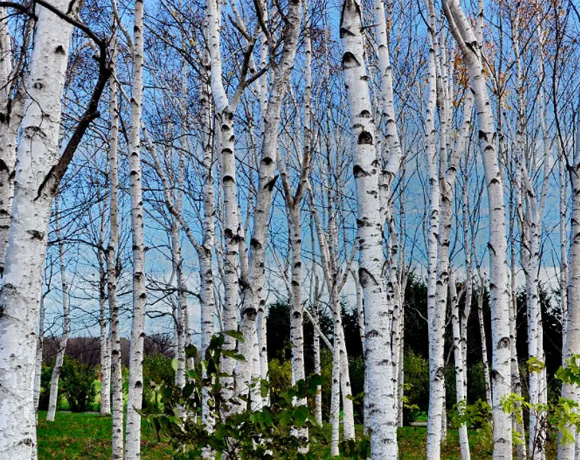
silver birch

What Are Betulin And Betulinic Acid?

Betulin and betulinic acid are key compounds extracted from birch bark. While both are widely distributed in nature, their natural concentrations vary significantly. In the outer bark of species such as Betula platyphylla (Japanese white birch), Betula pubescens (downy birch), and Betula pendula (silver birch), betulin content can range from 10% to 45% of the dry weight; it reaches 34% in the outer bark of Betula platyphylla and up to 56% in Betula alleghaniensis (yellow birch) extracts.
Furthermore, betulin can be sourced from over two hundred different plant species. In contrast, although betulinic acid is also found in birch bark, its natural concentration is generally lower, typically remaining below 12%.

Chemical Structure of Betulin and Betulinic Acid

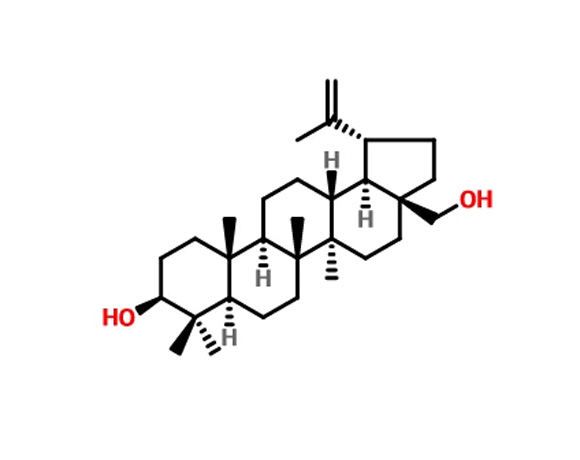
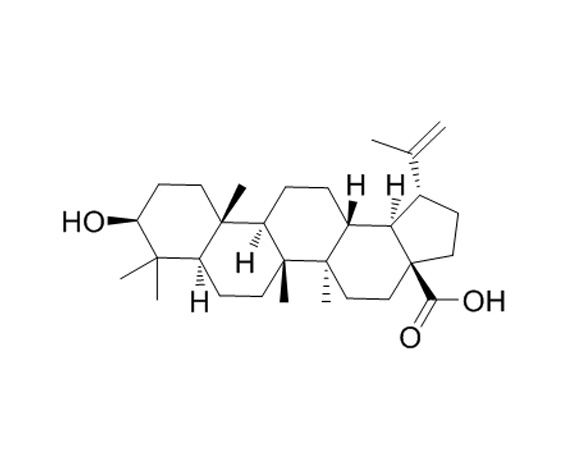
Although both betulin and betulinic acid are classified as triterpenes, they exhibit significant differences in their chemical structures. The betulin molecule contains a hydroxyl group, whereas the betulinic acid molecule contains a carboxyl group, resulting in distinct biological functions.
The core difference lies in the functional group at the C-28 position. In betulin, the C-28 position features a hydroxymethyl group (-CH₂OH), and its chemical name is lup-20(29)-ene-3β,28-diol. Betulinic acid, on the other hand, is an oxidized derivative of betulin; it features a carboxyl group (-COOH) at the C-28 position, and its chemical name is 3β-hydroxy-lup-20(29)-en-28-oic acid.
betulin
This seemingly minor difference in functional groups significantly influences the physicochemical properties and biological activities of the two compounds. The presence of a carboxyl group renders betulinic acid powder slightly more polar and acidic than betulin and provides it with a greater potential for intermolecular interactions; consequently, the two compounds differ significantly in terms of solubility, target selectivity, and mechanisms of action.
betulinic acid

Betulin and Betulinic Acid

Similarities

Both betulin and betulinic acid are pentacyclic triterpenoids derived from birch bark. Their most fundamental shared characteristic is the ability to selectively induce programmed cell death (apoptosis) in cancer cells via the intrinsic mitochondrial pathway while exhibiting low toxicity toward normal cells.
Both compounds demonstrate broad-spectrum anticancer activity against various malignancies, including lung cancer, breast cancer, colon cancer, melanoma, and leukemia, and possess pharmacological properties such as anti-inflammatory, antiviral, and hepatoprotective effects.

Differences

Betulin primarily acts on the cell cycle; it exhibits stronger cytotoxicity against neuro-tumor cells than its derivatives and possesses unique anticonvulsant activity. However, its range of targets is relatively limited, and it does not directly affect mitochondria.
Betulinic acid exhibits higher activity and a more complex mechanism of action. In addition to inducing apoptosis, it inhibits topoisomerase, aminopeptidase N, and the NF-κB pathway, and suppresses metastasis by reversing the epithelial-mesenchymal transition (EMT); furthermore, its apoptotic effect is not entirely dependent on caspases.

Antioxidant capacity

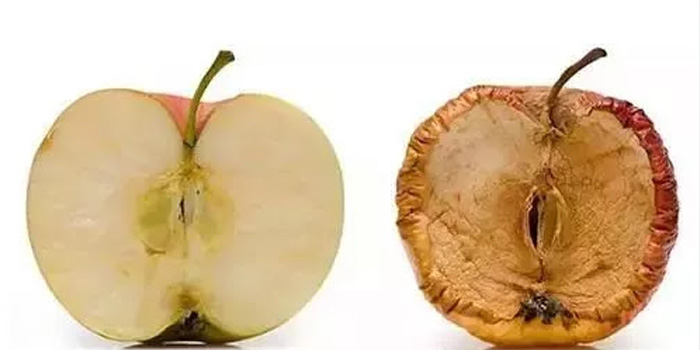
Both betulin and betulinic acidexhibit potent Antioxidant properties and the ability to scavenge free radicals. However, their mechanisms of action differ significantly: betulin primarily functions via hydrogen atom transfer (HAT), whereas betulinic acid acts mainly through electron transfer (ET) reactions. Betulin demonstrates a superior antioxidant index compared to betulinic acid; consequently, it exhibits more pronounced anti-aging effects at the cellular level.
antioxidant capacity

Anticancer activity

Betulinic acid exhibits stronger anticancer activity than betulin. This enhanced activity is primarily attributed to the presence of a carboxyl group, a strongly acidic functional group that is absent in betulin.
The carboxyl group enables betulinic acid to form hydrogen bonds and electrostatic interactions with specific targets in cancer cells, such as mitochondrial membrane proteins, thereby directly triggering mitochondria-mediated apoptosis through mechanisms including caspase cascade activation. In contrast, the absence of this functional group in betulin results in weaker binding affinity for these targets, accounting for its comparatively lower anticancer potency.

Anti-inflammatory effects

The anti-inflammatory activity of betulinic acid is markedly stronger than that of betulin. The presence of the carboxyl group enhances target specificity and signal-regulatory capabilities, leading to significantly improved anti-inflammatory performance compared to betulin.
anti-inflammatory effects

How to choose between betulin and betulinic acid?

Applications of Betulin

Betulin is abundant in birch bark and inexpensive to extract, making it suitable as a foundational functional ingredient in skincare products. Its anti-inflammatory, wound-healing, and antioxidant properties make it an ideal ingredient for developing daily skincare products focused on anti-aging and barrier repair, particularly formulations for sensitive skin repair. It also serves as an industrial starting material for the production of betulinic acid, holding significant supply chain value in the pharmaceutical intermediate sector.

Applications of Betulinic Acid

Although betulinic acid has lower natural abundance and higher purification costs, it possesses greater biological activity and a more complex mechanism of action. Due to its anti-inflammatory and melanin-inhibiting properties, it is used to develop high-end, functional skincare products aimed at soothing the skin and fading dark spots. In the fields of pharmaceutical and health supplement R&D, its activities, such as inducing cancer cell apoptosis, anti-HIV effects, and liver protection, have garnered widespread attention.
It is particularly well-suited for high-value-added development as an active ingredient in adjuvant cancer therapies and functional health supplements, representing a key focus area for research-grade raw materials.
Dimension Betulin Betulinic Acid
Natural content 30%–40% (extremely high) < 12% (relatively low)
Extraction cost Low High
Core advantage Strong antioxidant capacity, cost-effective Multi-target bioactivity, extensive research
Recommended applications Antioxidant skincare base ingredient; precursor for Betulinic Acid synthesis High-value functional cosmeceuticals; pharmaceutical / nutraceutical R&D
Target positioning Daily anti-ageing, repair-oriented skincare Premium efficacy formulations, research-grade applications

Kintainutri®’s Betulin and Betulinic Acid

If you are looking for betulin or betulinic acid powder as a raw material for your products, you are welcome to source them from Kintainutri®. We offer bulk supplies of birch bark extract powder. As a professional supplier of plant extract powders, we operate our own manufacturing facilities, ensuring high-quality products, reliable service, and competitive pricing. We also support custom production to meet specific requirements for birch bark extract powder specifications. Contact us today for a quote and free samples!
kintainutri logo